We Use CookiesWe use cookies to enhance the security, performance, functionality and for analytical and promotional activities. By continuing to browse this site you are agreeing to our privacy policy

10 Best Cameras for Beginners 2026 in the United States

#1

Winner

10.0 score

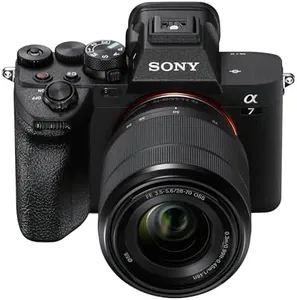
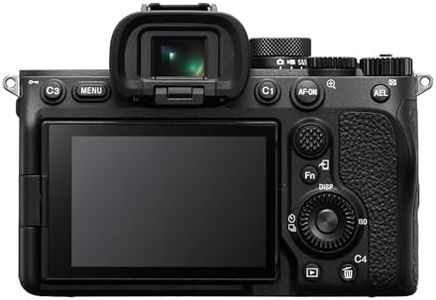
Sony Alpha 7 IV Full-Frame Mirrorless Interchangeable Lens Camera with 28-70mm Zoom Lens Kit
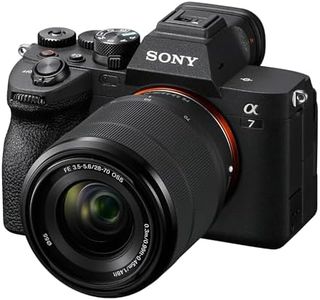
The Sony Alpha 7 IV is a powerful full-frame mirrorless camera offering a high-resolution 33MP sensor that captures detailed, sharp images—great if you want image quality that can grow with your skills. Its sensor size and advanced BIONZ XR processor help produce excellent color and low-light performance. The included 28-70mm lens is versatile for everyday shooting, though beginners might later want to explore other lenses for more creative control.

Rating
10.0
Chosen by1,297
Megapixels
Lens Compatibility
Ease of Use

Most important from
417 reviews

Megapixels
The 33MP full-frame sensor captures sharp, detailed images with vibrant colors and exceptional dynamic range, even in low-light conditions.
Lens Compatibility
The included 28-70mm lens is versatile and solid for general photography, though pairing the camera with higher-end lenses can unlock its full potential.
Ease of Use
The menu system is intuitive and easy to navigate, making the transition smoother for users coming from other camera brands.
Autofocus System
The autofocus system is lightning-fast and highly accurate, with real-time eye detection for humans and animals that makes portraits and action shots effortless.
Video Capabilities
4K 60p video recording with 10-bit 4:2:2 color depth and effective image stabilization delivers smooth, professional-quality footage straight out of the camera.
#2
9.7 score

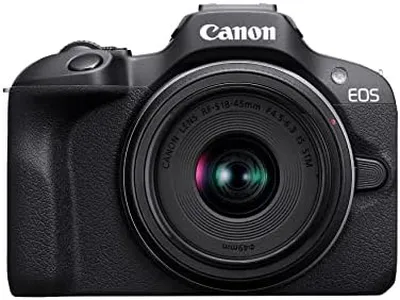
Canon EOS R50 Mirrorless Camera RF-S18-45mm F4.5-6.3 is STM Lens Kit, 24.2 Megapixel CMOS (APS-C) Sensor, 4K Video, Hybrid Camera, Photo and Video, Vlogging, Content Creator, RF Mount, Black
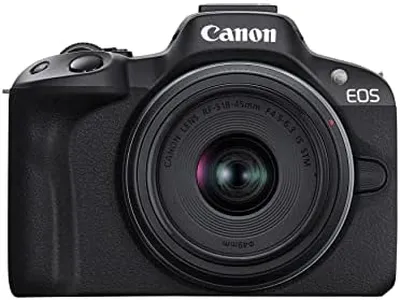
The Canon EOS R50 Mirrorless Camera with RF-S18-45mm F4.5-6.3 IS STM Lens is a solid choice for beginners looking to dive into photography and videography. With a 24.2 Megapixel CMOS (APS-C) sensor, this camera ensures high-quality images with great detail. Its DIGIC X processor aids in producing clear and vibrant photos, even in challenging lighting conditions thanks to its advanced low-light performance features.

Rating
9.7
Lens Compatibility
Ease of Use
Autofocus System

Most important from
1387 reviews

Lens Compatibility
The RF mount offers compatibility with a wide range of lenses, adding to its versatility.
Ease of Use
The Canon EOS R50 rekindles the love for photography with its ease of use and stunning picture quality right off the bat.
Autofocus System
AI-driven autofocus and background blur make it perfect for close-up shots and vlogging.
Video Capabilities
Compact and lightweight, it's a game-changer for content creators, delivering stunning 4K video and dynamic shots.
Connectivity
The colors captured are vibrant and transferring pictures via Bluetooth is seamless.
#3
9.4 score

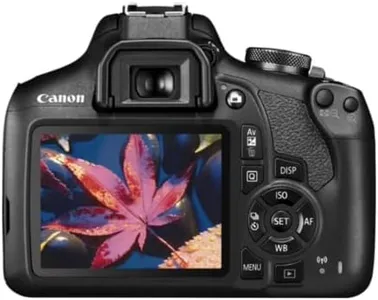
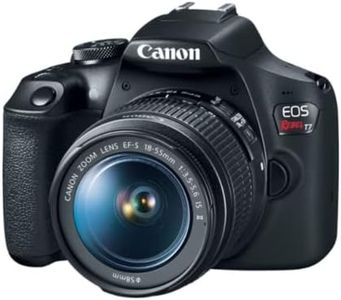
Canon EOS Rebel T7 DSLR Camera|2 Lens Kit with EF18-55mm + EF 75-300mm Lens, Black
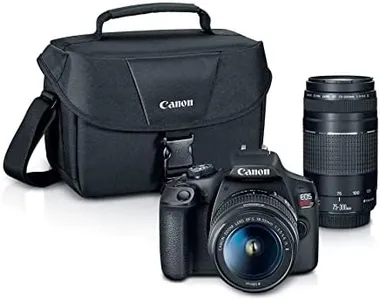
The Canon EOS Rebel T7 DSLR is a solid choice for beginner photographers who want to learn photography with a reliable and easy-to-use camera. It features a 24.1-megapixel APS-C sensor, which means it can capture sharp and detailed photos suitable for prints and sharing online. The camera comes with two lenses (18-55mm and 75-300mm), giving you flexibility for both wide-angle shots and zoomed-in images without needing to buy extra lenses right away. Its autofocus system has 9 points with phase detection and eye detection, which helps keep your subjects in focus, though it might not be as fast or advanced as higher-end models.

Rating
9.4
Ease of Use and Controls
Interchangeable Lenses
Connectivity

Most important from
8405 reviews

Ease of Use and Controls
Its intuitive controls make learning photography straightforward and enjoyable.
Interchangeable Lenses
The included lenses offer versatile options for portraits, landscapes, and everyday shots.
Connectivity
Built-in WiFi enables quick and convenient photo transfers to phones or computers.
Sensor Size
Despite its beginner-friendly design, the image quality is remarkably impressive for a 24-megapixel sensor.
Size and Weight
The camera’s size is comfortable and portable, fitting easily into everyday use.

Top 10 Best Cameras for Beginners 2026 in the United States
#1

Winner

10.0  score

Sony Alpha 7 IV Full-Frame Mirrorless Interchangeable Lens Camera with 28-70mm Zoom Lens Kit
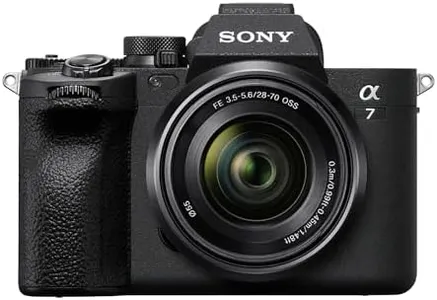
Megapixels: 33 MP
Sensor Size: Full Frame (35mm)
Lens Compatibility: Sony E-mount wide-angle lenses
Autofocus System: 759 hybrid points, real-time Eye AF
Video Capabilities: 4320p 4K at 60fps, H.265, XAVC
Battery Life: 110 Hours
Connectivity: Wi-Fi, Bluetooth, USB, HDMI

Chosen by 1297 this week

Canon EOS Rebel T7 DSLR Camera|2 Lens Kit with EF18-55mm + EF 75-300mm Lens, Black
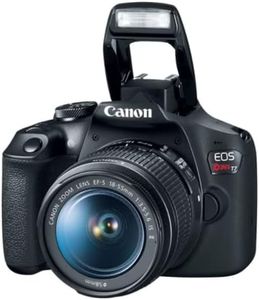
Sensor Size: APS-C
Megapixels: 24.1
Interchangeable Lenses: Yes
Autofocus System: 9 points, phase and eye detection
Ease of Use and Controls: Simple controls, scene and creative auto
Size and Weight: 3 Pounds
Connectivity: Wi-Fi, NFC, HDMI, USB built-in

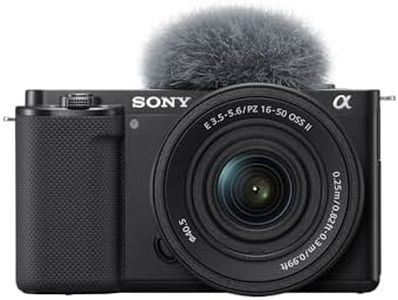
Sony Alpha ZV-E10 - APS-C Interchangeable Lens Mirrorless Vlog Camera Kit - Black, ZVE10KB
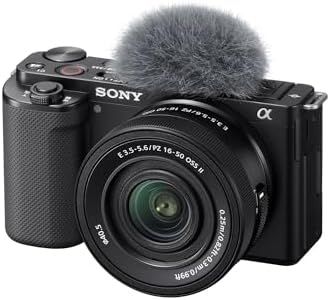
Sensor Size: APS-C
Megapixels: 24.2 MP
Interchangeable Lenses: Yes
Autofocus System: 425 points, Hybrid AF modes
Ease of Use and Controls: Showcase mode, defocus button, 3-inch screen
Size and Weight: 1.55 Pounds
Connectivity: Wi-Fi, Bluetooth, USB

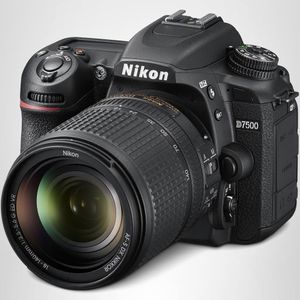
Nikon D7500 20.9MP DSLR Camera with AF-S DX NIKKOR 18-140mm f/3.5-5.6G ED VR Lens, Black
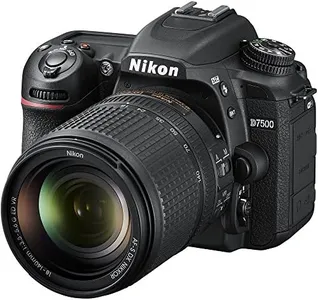
Megapixels: 20.9 MP
Lens Compatibility: Nikon DX
Autofocus System: 51-point, 15 cross-type
Video Capabilities: 4K, 1080p
Connectivity: Bluetooth, Wi-Fi

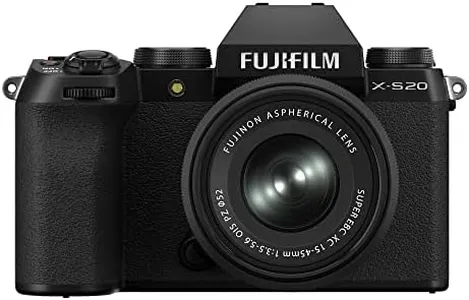
Fujifilm X-S20 Mirrorless Digital Camera XC15-45mm Lens Kit
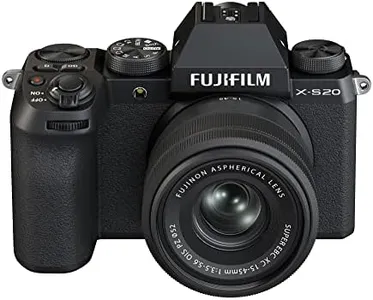
Megapixels: 26.1 MP
Lens Compatibility: Fujifilm X
Ease of Use: Intuitive layout, 180° LCD touchscreen
Autofocus System: Auto Detection AF, 171 points
Video Capabilities: 4K/60P, 6.2K/30p
Battery Life: 750 frames (normal), 800 (economy)
Connectivity: Bluetooth, Wi-Fi, USB-C

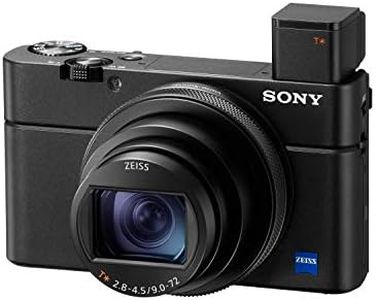
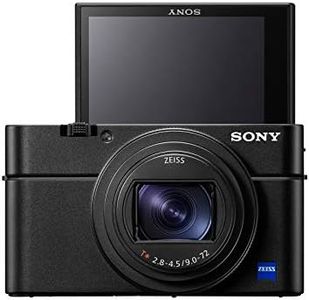
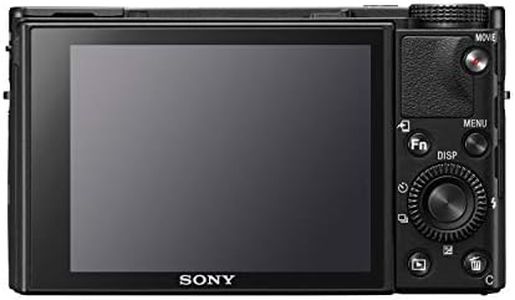
Sony RX100 VII Premium Compact Camera with 1.0-type stacked CMOS sensor (DSCRX100M7)
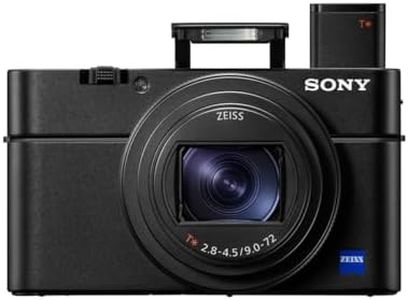
Sensor Size: 1-inch
Megapixels: 20.1 MP
Interchangeable Lenses: No
Autofocus System: 357 phase and 425 contrast points
Ease of Use and Controls: Auto and Scene selections
Size and Weight: 275 Grams
Connectivity: Wi-Fi, Bluetooth

Sony ZV-1F Vlog Camera for Content Creators and Vloggers White
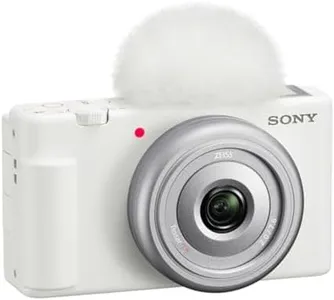
Sensor Size: 1-inch
Megapixels: 20.1 MP
Interchangeable Lenses: No
Autofocus System: Contrast Detection with Eye-AF
Ease of Use and Controls: Side-articulating touchscreen, simple controls
Size and Weight: 0.56 Pounds, Compact
Connectivity: Wi-Fi, Bluetooth, HDMI, USB

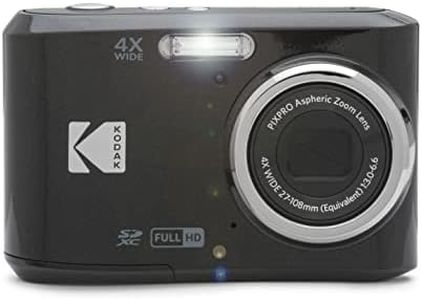
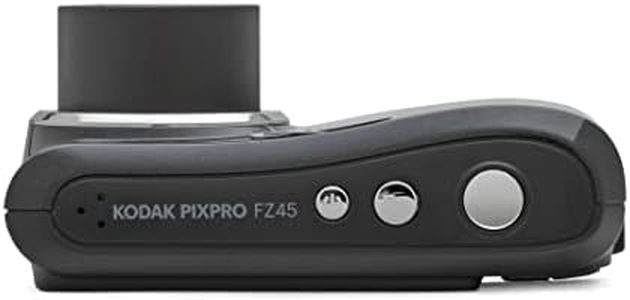
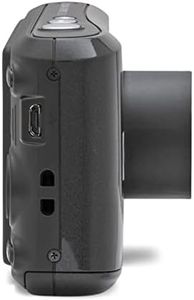
Kodak PIXPRO Friendly Zoom FZ45-BK 16MP Digital Camera with 4X Optical Zoom 27mm Wide Angle and 2.7" LCD Screen (Black)
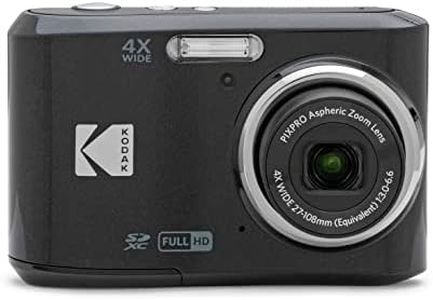
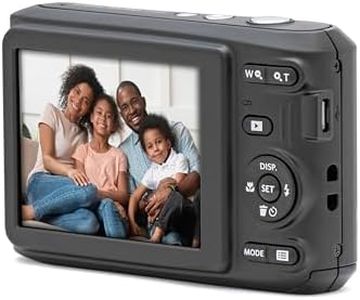
Sensor Size: 1/2.3-inch
Megapixels: 16 MP
Interchangeable Lenses: No
Autofocus System: Automatic AF, Contrast Detection, 9 points
Ease of Use and Controls: Simple controls, 2.7-inch LCD
Size and Weight: 0.26 Pounds
Connectivity: Wi-Fi, USB
How do we rank products for you?

Our technology thoroughly searches through the online shopping world, reviewing hundreds of sites. We then process and analyze this information, updating in real-time to bring you the latest top-rated products. This way, you always get the best and most current options available.

headphones-stars

Buying Guide for the Best Cameras for Beginners

Choosing a camera as a beginner should be an exciting journey focused on understanding your needs and learning the basics of photography. Rather than seeking the most advanced or professional option, it's best to look for something user-friendly that matches the types of photos you want to take. Key features and specifications matter, but their importance depends on how you intend to use your camera—whether that's capturing family events, landscapes, travel memories, or experimenting with creative photography.
Sensor SizeThe sensor is the part of the camera that captures light to create your photos. Sensor size impacts image quality, especially in low-light situations, and determines how much background blur you can get. The main types are Full Frame (largest), APS-C (medium), and Micro Four Thirds (smaller). Larger sensors generally give better image quality but make the camera bulkier and pricier. For beginners, a mid-sized sensor like APS-C often offers a good balance of image quality and portability. Think about whether you need super high image quality or if you value a lighter, more compact camera for everyday use.
MegapixelsMegapixels tell you how many tiny dots make up your photo. More megapixels mean you can print larger pictures or crop your photos without losing detail, but after a certain point, the difference becomes hard to notice for most people. Cameras with 12–24 megapixels are great for most beginners—enough for printing and digital use. Only opt for higher megapixels if you plan to do a lot of large prints or detailed cropping, but remember that higher numbers do not always mean better pictures.
Interchangeable LensesSome cameras let you switch out lenses for different types of photography, while others have a built-in lens. Interchangeable lens cameras, like DSLRs and mirrorless models, give you more creative options by using wide, zoom, or specialty lenses. Fixed lens cameras (compacts/point-and-shoots) are simpler and smaller, requiring less decision-making. If you think you’ll want to explore various photography styles, go for an interchangeable lens option. For quick, simple shooting, a fixed lens camera might be a better fit.
Autofocus SystemThe autofocus system helps keep your subject sharp. More autofocus points and faster systems help you capture moving subjects and work better for action shots. For beginners, a camera with reliable and easy-to-use autofocus is helpful, especially for photographing kids, pets, or sports. If you prefer landscapes or still life, autofocus speed is less critical, but you’ll still want a system that is straightforward and accurate.
Ease of Use and ControlsBeginner-friendly cameras often have simple menus, helpful guided modes, and physical buttons or touchscreens that are easy to understand. Some offer helpful tips right on the camera. If you're new to photography, pick a camera with clear menus and options to use automatic or scene modes while you learn. More advanced controls are good if you want to gradually learn manual photography, but don't let too many features overwhelm your first experience.
Size and WeightHow big and heavy a camera is can make a big difference in how much you use it. Larger cameras can offer more features and feel sturdier, but can be tiring to carry around, especially when traveling. Smaller, lighter cameras are easier to take everywhere and use for casual photography. Think about whether you’ll carry your camera daily or on special occasions, and choose the size that matches your lifestyle.
ConnectivityModern cameras often connect to smartphones or computers via Wi-Fi, Bluetooth, or cables. This makes it much easier to share photos instantly to social media or back them up. For beginners who want to share photos quickly, or for those who hate cables, built-in wireless features can be a big plus. If you don't plan to share often or are comfortable using a memory card, connectivity may be less important.

FAQ