We Use CookiesWe use cookies to enhance the security, performance, functionality and for analytical and promotional activities. By continuing to browse this site you are agreeing to our privacy policy

10 Best Bass Compressor Pedals 2026 in the United States

#1

Winner

10.0 score

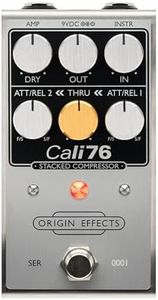
Origin Effects Cali76 Bass Compressor - Fifteen Blue
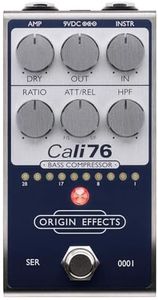
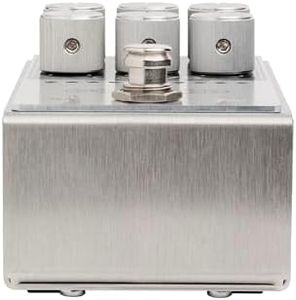
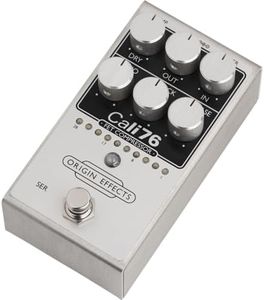
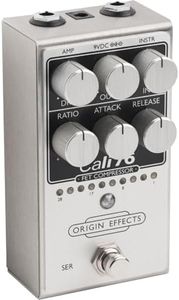
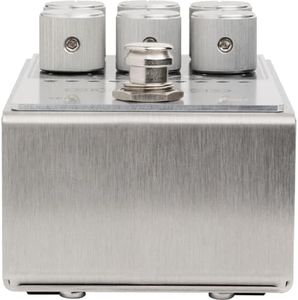
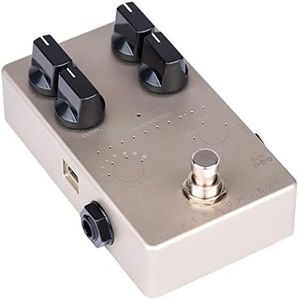
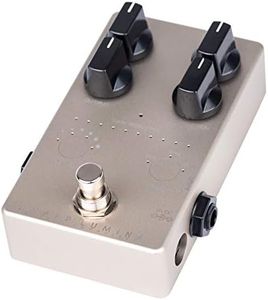
The Origin Effects Cali76 Bass Compressor - Fifteen Blue is a high-quality bass compressor pedal designed with an all-analog signal path and ultra-fast FET compression that closely follows the classic 1176 compressor style. It stands out with dedicated controls for attack, release, and compression ratio, allowing precise shaping of your bass tone and dynamics. The addition of a sidechain high-pass filter helps avoid over-compressing low bass frequencies, which is great for maintaining clarity and punch. A dry blend control lets you mix compressed and uncompressed signals for parallel compression, giving you extra flexibility in your sound. The 10-LED bar graph gain reduction meter provides visual feedback on how much compression is applied, making adjustments easier to manage. Its premium build and quality components suggest reliability and excellent sound fidelity.

Rating
10.0
Chosen by1,205
Threshold
Attack and Release
Tone Control

Most important from
27 reviews

Threshold
Features a unique input knob that smartly increases input gain while lowering threshold, preventing unwanted volume drops during compression.
Attack and Release
Provides precise attack and release controls that add a dynamic 'pop' to bass tones, enhancing musical expression.
Tone Control
Offers superior tonal control with dedicated knobs for blending dry and compressed signals and managing low-frequency response.
#2
9.7 score

Origin Effects Cali76 Bass Compressor Pedal - Black
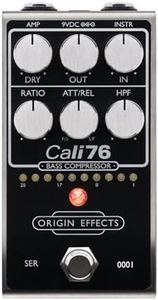
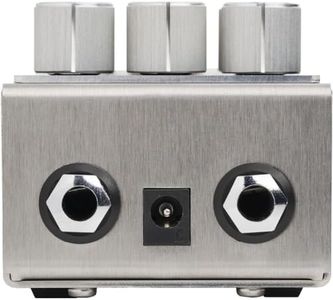
The Origin Effects Cali76 Bass Compressor Pedal in black is an analog, FET-based compression pedal designed for electric bass guitars. At a weight of 1.35 pounds and dimensions of 5.35 x 3.5 x 3.5 inches, it's a fairly compact pedal that should easily fit into most pedalboards. It operates on 9 volts, using a corded electric power source, which is the standard for many pedals and ensures reliable performance without the need for battery replacement.

#3
9.4 score

Keeley Bassist Compressor and Limiting Amplifier Pedal
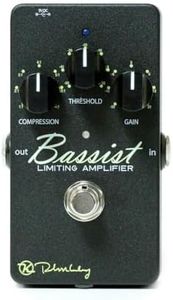
The Keeley Bassist Compressor and Limiting Amplifier Pedal is a solid choice for bass players looking for high-quality compression without breaking the bank. It uses a specialized THAT Corp. 4320 chip and high-end components to deliver very clear, studio-grade compression and limiting, which means your bass tone stays natural and detailed even when you compress the sound.

Rating
9.4
Compression Ratio
Threshold
Attack and Release

Most important from
69 reviews

Compression Ratio
The pedal makes volume control consistent without wild fluctuations, thanks to an intuitive compression indicator.
Threshold
Perfectly suited for bass guitars by focusing on essential compression needs, avoiding unnecessary complexity.
Attack and Release
Despite lacking attack and release controls, the pedal smartly adjusts these parameters automatically based on input level.
Tone Control
The sound quality remains clean and clear, handling hot signals from active 5-string basses without distortion.
Size and Power Requirements
Compact size and standard 9V power make it convenient for pedalboards without sacrificing performance.

Top 10 Best Bass Compressor Pedals 2026 in the United States

#1

Winner

10.0  score

Origin Effects Cali76 Bass Compressor - Fifteen Blue
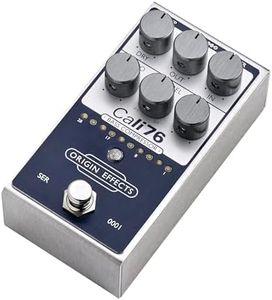
Compression Ratio: dedicated compression ratio controls
Attack and Release: dedicated attack and release controls
Tone Control: robust tone controls
Size and Power Requirements: 200mA at 9V, 1.3 pounds

Chosen by 1205 this week

Origin Effects Cali76 Bass Compressor Pedal - Black
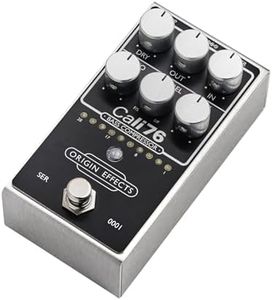
Attack and Release: attack/release controls
Size and Power Requirements: 5.35 x 3.5 x 3.5 inches, 9V
Bypass Type: no true bypass option

Keeley Bassist Compressor and Limiting Amplifier Pedal

Tone Control: limited
Size and Power Requirements: 6x4x3 inches, 9V battery, 300mA
Bypass Type: true bypass

Origin Effects Cali76 FET Compressor Pedal
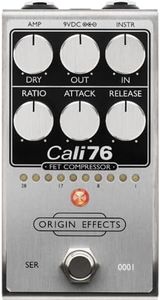
Compression Ratio: adjustable
Attack and Release: adjustable
Size and Power Requirements: 5.3x3.5x3.45 inches, 9V, 100mA
Bypass Type: true bypass

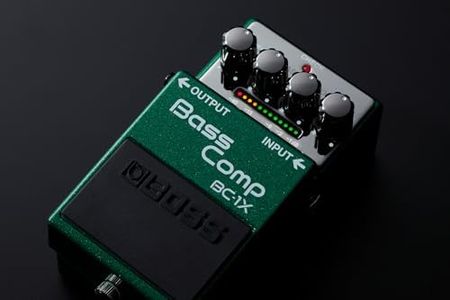
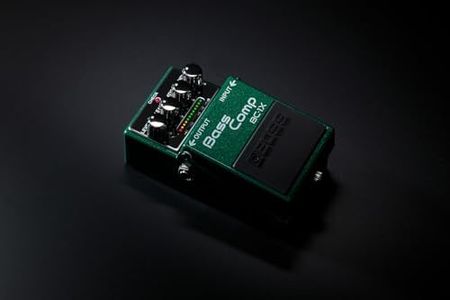
BOSS BC-1X Bass Compressor Guitar Pedal (BC-1X), Green
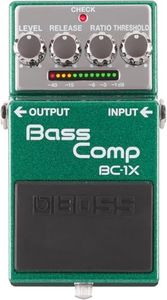
Compression Ratio: ratio
Threshold: threshold
Attack and Release: release only, no attack
Size and Power Requirements: 6 x 3.7 x 2.65 in, 1 battery

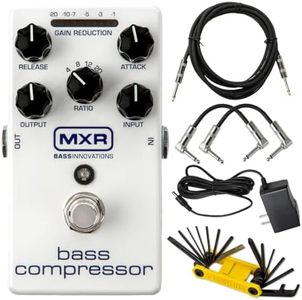
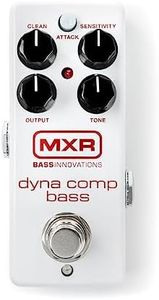
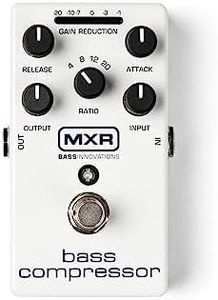
MXR® Bass Compressor

Size and Power Requirements: 2.6"L x 5.5"W x 4.4"H, 9V
Bypass Type: true bypass

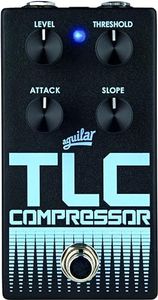
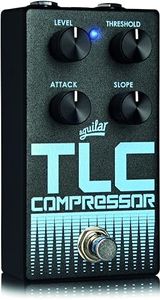
Aguilar TLC V2 Bass Compressor Pedal

Compression Ratio: controlled by slope
Threshold: adjustable
Attack and Release: attack adjustable; release not adjustable
Tone Control: Full Spectrum Tilt EQ
Size and Power Requirements: 5.8x3.35x3 in; 9V, 50mA
Bypass Type: true bypass
How do we rank products for you?

Our technology thoroughly searches through the online shopping world, reviewing hundreds of sites. We then process and analyze this information, updating in real-time to bring you the latest top-rated products. This way, you always get the best and most current options available.

headphones-stars

Buying Guide for the Best Bass Compressor Pedals

Choosing the right bass compressor pedal can significantly enhance your bass guitar's sound by controlling the dynamic range and adding sustain. A compressor pedal can help even out the volume of your playing, making softer notes louder and louder notes softer, which is particularly useful in a live performance or recording setting. To find the best fit for you, it's important to understand the key specifications and how they align with your playing style and needs.
Compression RatioThe compression ratio determines how much the signal is reduced. A higher ratio means more compression. For example, a 4:1 ratio means that for every 4 dB of input signal above the threshold, the output will only increase by 1 dB. Lower ratios (2:1 or 4:1) are more subtle and natural-sounding, suitable for general playing. Higher ratios (10:1 or higher) are more aggressive and can be used for special effects or to control very dynamic playing. Choose a ratio based on how much control you want over your dynamics.
ThresholdThe threshold is the level at which the compressor starts to work. Signals below this level are unaffected, while signals above it are compressed. A lower threshold means more of your signal will be compressed, which can be useful for evening out your playing. A higher threshold will only compress the loudest parts of your signal, preserving more of your natural dynamics. Consider your playing style: if you play with a lot of dynamics, a higher threshold might be better; if you want a more consistent sound, a lower threshold could be ideal.
Attack and ReleaseAttack and release settings control how quickly the compressor responds to the input signal. Attack time is how fast the compressor kicks in after the signal exceeds the threshold, while release time is how quickly it stops compressing after the signal falls below the threshold. Fast attack times can catch and control peaks effectively, but may squash the initial transient of your notes. Slow attack times allow more of the note's natural attack to come through. Release times affect how natural the compression sounds; too fast can cause a pumping effect, while too slow can make the compression too obvious. Adjust these settings based on whether you want a more transparent or more pronounced compression effect.
Tone ControlSome compressor pedals include a tone control, which allows you to adjust the EQ of the compressed signal. This can be useful for maintaining clarity and presence, especially if the compression is making your sound too dull or too bright. If you find that compression is affecting your tone in a way you don't like, a tone control can help you dial in the perfect sound. Consider whether you need this feature based on how much you rely on your pedalboard for tone shaping.
Size and Power RequirementsThe physical size of the pedal and its power requirements are practical considerations. Pedals come in various sizes, from compact to larger units with more features. Make sure the pedal fits on your pedalboard and that you have the appropriate power supply. Some pedals require standard 9V power, while others might need more specific power sources. Ensure compatibility with your existing setup to avoid any issues.
Bypass TypeBypass type refers to how the pedal handles your signal when it is turned off. True bypass means the signal passes through the pedal without any alteration, preserving your tone. Buffered bypass can help maintain signal strength over long cable runs but may slightly alter your tone. If you have a lot of pedals or long cables, a buffered bypass might be beneficial. If you prefer the purest signal path, look for true bypass.

FAQ