We Use CookiesWe use cookies to enhance the security, performance, functionality and for analytical and promotional activities. By continuing to browse this site you are agreeing to our privacy policy

10 Best Digital Cameras 2026 in the United States
#1

Winner

10.0 score

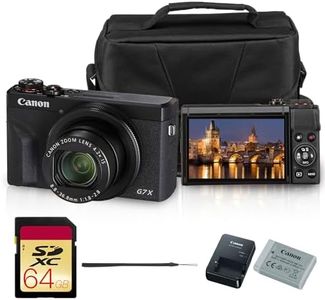
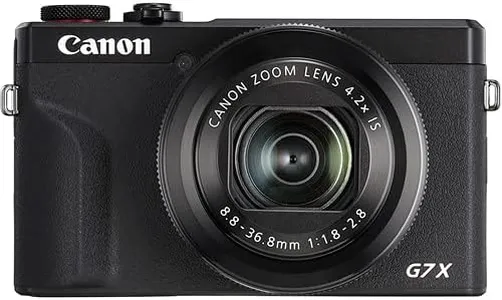
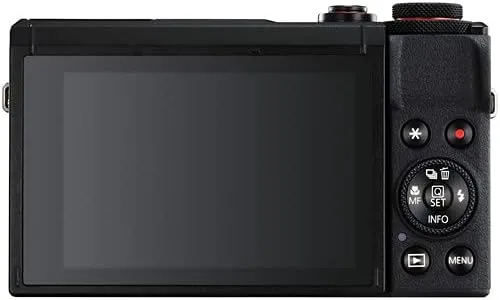
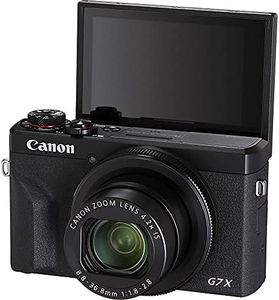
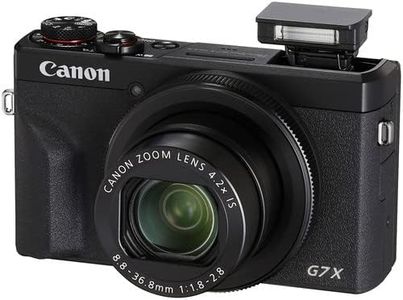
Canon PowerShot G7 X Mark III Digital Camera (Black)

The Canon PowerShot G7X Mark III is a compact digital camera that packs a punch, making it an excellent choice for both photography and videography enthusiasts. With a 20.1 Megapixel stacked CMOS sensor and DIGIC 8 image processor, it delivers high-quality images with impressive detail. The 4.2x optical zoom lens (24-100mm f/1.8-2.8) offers versatility for capturing a range of subjects, from wide landscapes to close-up portraits, while the optical image stabilization helps keep your shots steady, reducing blur during handheld shooting.

Rating
10.0
Chosen by1,391
Autofocus System
Video Capabilities
Battery Life

Most important from
1008 reviews

Autofocus System
Although the autofocus can be finicky, especially in low light, the firmware updates have improved its speed and reliability.
Video Capabilities
The Canon G7X Mark III outperforms any smartphone camera, especially in video capabilities.
Battery Life
Battery life is sufficient for stills, lasting almost a week on moderate use, but video shooting may drain it faster.
Build Quality and Ergonomics
The touch screen functions are highly responsive, and the solid build quality offers a nice weight and feel in hand.
Connectivity
Transferring images via Bluetooth is seamless, and using an SD card dongle for videos ensures quick file transfers.
#2
10.0 score

Kodak PIXPRO FZ55-RD 16MP Digital Camera 5X Optical Zoom 28mm Wide Angle 1080P Full HD Video 2.7" LCD Vlogging Camera (Red) Packaging May Vary

The KODAK PIXPRO FZ55-RD is a solid choice for those seeking a straightforward and budget-friendly digital camera. Featuring a 16MP CMOS sensor, it delivers decent image quality for casual photography. The 5X optical zoom and 28mm wide-angle lens offer versatility for capturing both close-ups and wider scenes. Its 1080P Full HD video capability makes it suitable for vlogging and recording decent-quality videos. The 2.7-inch LCD screen provides a clear display for reviewing shots and navigating menus.

Rating
10.0
Video Capabilities
Battery Life
Build Quality and Ergonomics

Most important from
6042 reviews

Video Capabilities
Super easy to use with different shooting settings, zoom, and video recording capabilities.
Battery Life
Rechargeable battery is a big plus, allowing charging on the go without the need for constant AA batteries.
Build Quality and Ergonomics
Easy setup and menu navigation with on-screen prompts that are simple to follow.
#3
9.7 score

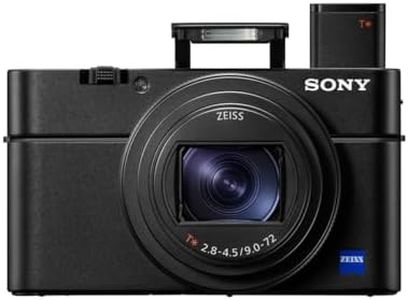
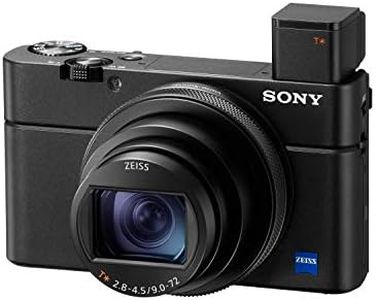
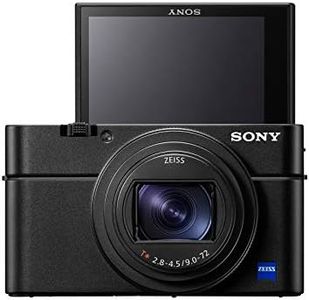
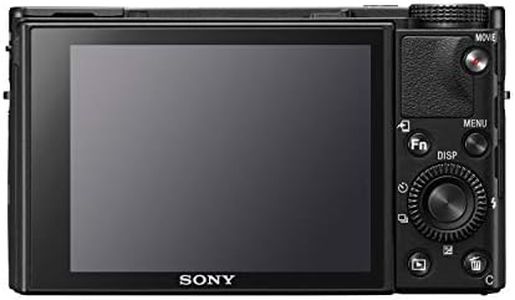
Sony RX100 VII Premium Compact Camera with 1.0-type stacked CMOS sensor (DSCRX100M7)

The Sony RX100 VII is a premium compact digital camera, boasting a 20.1-megapixel 1.0-type stacked CMOS sensor, which promises high-quality images. Its Zeiss Vario Sonnar T lens with a versatile 24-200mm zoom range is impressive for a compact camera, providing good flexibility for various shooting scenarios. The camera's autofocus system is highly advanced, with 357-point phase detection and 425-point contrast detection, ensuring fast and accurate focusing. Additionally, it offers real-time tracking and eye autofocus for both humans and animals, which is great for capturing sharp images of moving subjects.

Rating
9.7
Autofocus System
Video Capabilities
Build Quality and Ergonomics

Most important from
645 reviews

Autofocus System
The real-time tracking and eye autofocus features are impressive and a key reason for upgrading.
Video Capabilities
Active stabilization works great for smooth video recording, even while walking.
Build Quality and Ergonomics
Build quality is consistently high, as expected from Sony's RX series.

Top 10 Best Digital Cameras 2026 in the United States

#1

Winner

10.0  score

Canon PowerShot G7 X Mark III Digital Camera (Black)

Megapixels: 20.1 MP
ISO Range: Up to 51200
Lens Compatibility: Canon EF
Autofocus System: Contrast Detection
Video Capabilities: 4K at 30 fps, Full HD 120 fps
Build Quality and Ergonomics: Solid, compact size
Connectivity: Wi-Fi, NFC

Chosen by 1391 this week

Sony RX100 VII Premium Compact Camera with 1.0-type stacked CMOS sensor (DSCRX100M7)

Megapixels: 20.1 MP
Sensor Size: 1.0-type
ISO Range: 64-25600
Lens Compatibility: Zeiss Vario Sonnar T, 24-200mm
Autofocus System: 357-point phase, 425-point contrast
Video Capabilities: 4K recording, active stabilization
Battery Life: Decent but not exceptional
Build Quality and Ergonomics: Solid, compact, ergonomic design
Connectivity: Bluetooth, Wi-Fi

FUJIFILM X-E5 Mirrorless Digital Camera XF23mmF2.8 Lens Kit - Black

Sensor Size: APS-H
Megapixels: 40.2 MP
Lens Options: 23mm f/2.8 prime, 1.4x or 2x zoom
Autofocus System: 49 hybrid points, AI detection, AF-C, AF-S
Image Stabilization: Sensor-shift, up to seven stops
Video Features: 4K 30fps, MP4, no audio
Size and Weight: 9.1"D x 9.1"W x 9.1"H, 2 lbs
Ease of Use and Controls: Tactile dials, customizable dial, manual controls

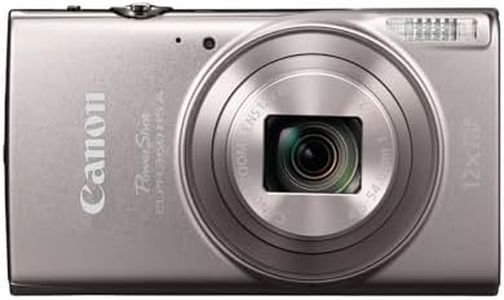
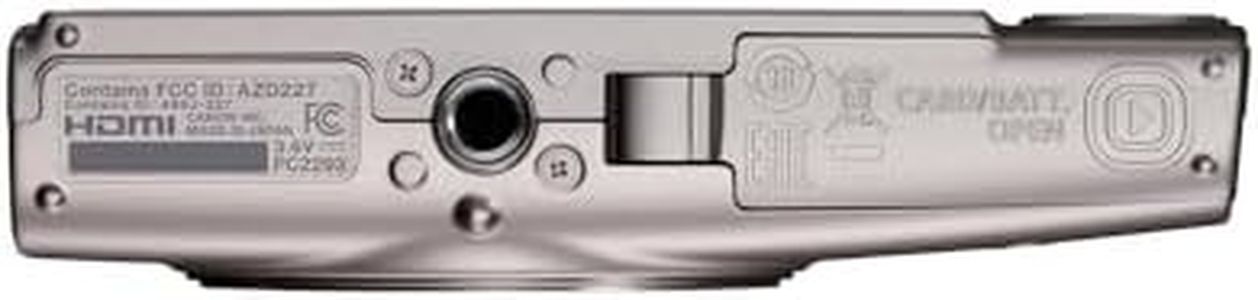
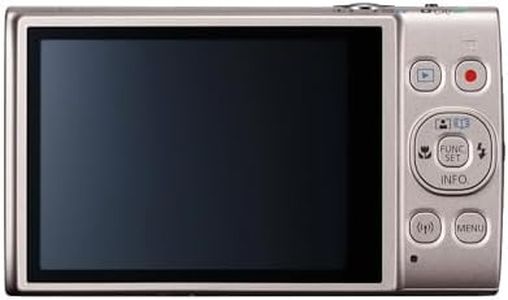
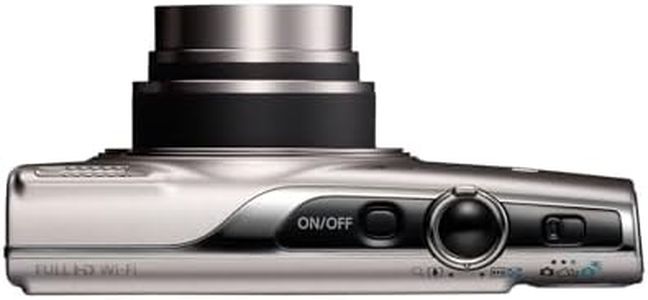
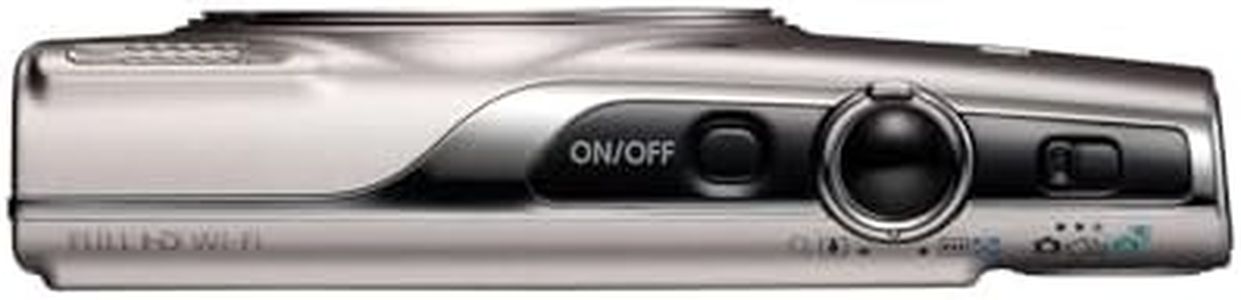
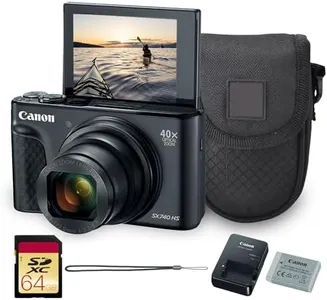
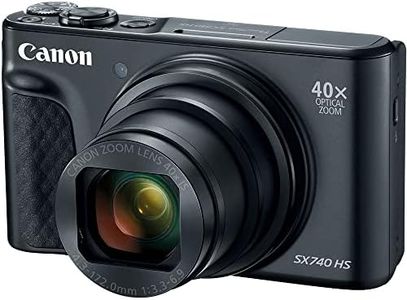
Canon Cameras US Point and Shoot Digital Camera with 3.0" LCD, Silver (2956C001)

Megapixels: 20.3 MP
Sensor Size: Other
Lens Compatibility: Canon, Canon RF
Autofocus System: Contrast Detection, Single-Servo AF, 1 point
Video Capabilities: 4K, 4K time-lapse, FHD 1080p
Battery Life: Moderate time, 1 x NB-13L battery
Build Quality and Ergonomics: Lightweight, compact, not water-resistant
Connectivity: Wi-Fi, Bluetooth, Micro-HDMI, USB 2.0

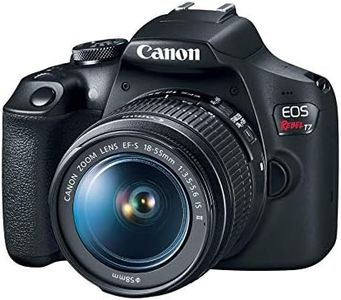
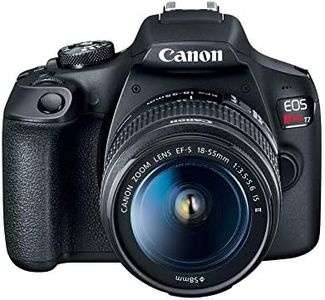
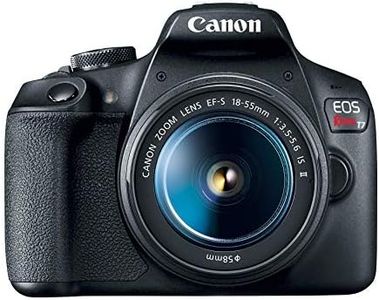
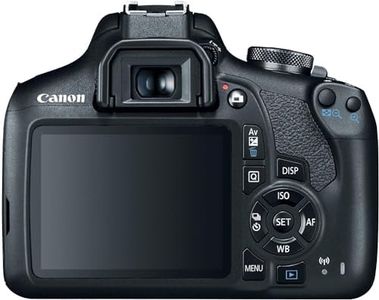
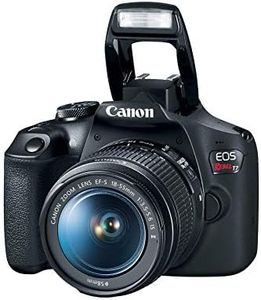
Canon EOS Rebel T7 DSLR Camera|2 Lens Kit with EF18-55mm + EF 75-300mm Lens, Black

Sensor Size: APS-C
Megapixels: 24.1 MP
Lens Options: 18-55mm wide, 75-300mm telephoto
Autofocus System: 9 points, Dual Pixel AF, eye detect
Image Stabilization: true
Video Features: Full HD 1080p, no 4K
Size and Weight: 3 pounds
Ease of Use and Controls: auto/manual modes, straightforward controls

Panasonic LUMIX S9 Full-Frame Mirrorless Camera with S 18-40mm F4.5-6.3 Lens, Compact, Lightweight Body, Perfect for Social Media and Travel, Cameras for Photography, DC-S9NK

Sensor Size: Full Frame (35mm)
Megapixels: 24.2 MP
Lens Options: 18-40mm, Wide Angle, f/4.5-6.3
Autofocus System: 255 points, Depth From Defocus
Image Stabilization: Optical
Video Features: 4K 60 FPS, MOV format
Size and Weight: 9.1 in height, 2.43 lbs
Ease of Use and Controls: 3-inch touch LCD, Wi-Fi, Bluetooth

Nikon D7500 20.9MP DSLR Camera with AF-S DX NIKKOR 18-140mm f/3.5-5.6G ED VR Lens, Black

Megapixels: 20.9 MP
Sensor Size: APS-C
ISO Range: 100 to 51200
Lens Compatibility: Nikon DX
Autofocus System: 51-point AF, 15 cross-type, eye detect
Video Capabilities: 4K UHD, Full HD 1080p stereo
Battery Life: Supports extended shoots, no frequent recharge
Build Quality and Ergonomics: Robust, ergonomic, comfortable grip
Connectivity: Wi-Fi, Bluetooth, USB, HDMI

Fujifilm X-T50 Mirrorless Digital Camera XC15-45mmF3.5-5.6 OIS PZ Lens Kit - Charcoal Silver

Sensor Size: APS-H
Megapixels: 40.2 MP
Lens Options: 15-45mm zoom, all Fujifilm X lenses
Autofocus System: 425 phase detection, Contrast AF
Image Stabilization: Sensor-shift, optical lens stabilization
Video Features: 6.2K@30fps, 4K@60fps, Full HD@240fps
Size and Weight: 438g, 4.6in height, 3in tilting screen
Ease of Use and Controls: Film dial 20 modes, easy controls
How do we rank products for you?

Our technology thoroughly searches through the online shopping world, reviewing hundreds of sites. We then process and analyze this information, updating in real-time to bring you the latest top-rated products. This way, you always get the best and most current options available.

headphones-stars

Buying Guide for the Best Digital Cameras

Choosing the right digital camera can feel overwhelming because there are so many options and technical terms. The best approach is to think about what you’ll use the camera for most often—whether it’s capturing family moments, traveling, sports, landscapes, or creative photography. By understanding the most important features, you can focus on what matters most to you instead of just chasing the highest numbers.
Sensor SizeSensor size refers to the physical dimensions of the sensor inside the camera, which captures light to create an image. This is important because larger sensors usually mean better image quality, especially in low light, and they also help create a blurred background effect. The common sizes you’ll see are full-frame, APS-C, and micro four thirds. Full-frame sensors are the largest and are great for serious photography and the best detail, but they make the camera heavier and bigger. APS-C sensors are a good middle ground, balancing quality and size for general use. Micro four thirds sensors are smaller, making the camera lighter and more portable, but may not perform as well in very dim conditions. Choose a sensor size based on whether you want maximum image quality or a lightweight, compact camera for travel and everyday use.
MegapixelsMegapixels measure how many millions of pixels a camera uses to create an image. It’s important, but not the only thing that matters for image quality. Higher megapixels mean you can make larger prints or crop your photos without losing detail, but most people only need enough for regular-sized prints or sharing online. Cameras with around 12-20 megapixels are usually enough for everyday use, while 24 megapixels or higher are useful if you plan to print large photos or crop a lot. Don’t just choose the camera with the biggest number—consider what you actually plan to do with your photos.
Lens OptionsThe lens is what focuses light onto the camera sensor, and its quality and flexibility have a big impact on your photos. Some cameras have fixed lenses built-in, making them simple to use but less flexible. Others use interchangeable lenses, letting you swap for a wide variety to suit different situations, like close-ups, wide landscapes, or distant subjects. If you want something easy and all-in-one, fixed-lens cameras are fine; but if you’re interested in growing your photo skills and experimenting, a camera system with interchangeable lenses is the way to go.
Autofocus SystemThe autofocus system helps the camera quickly and accurately focus on your subject. This is especially important for moving subjects, like kids, pets, or sports, but it’s useful for everyday shots, too. Basic autofocus systems work well for still subjects, while advanced systems with more focus points or tracking features are better for action. For shooting mostly landscapes or portraits, almost any system works. For fast action or unpredictable movements, prioritize cameras with sophisticated and fast autofocus.
Image StabilizationImage stabilization helps reduce blur caused by shaky hands, making your photos sharper, especially in low light or when using zoom. Some cameras have stabilization built into the body, some include it in the lens, and some have both. If you often shoot in low light or use long zoom lenses, stabilization is a great help. For tripod use or fast, bright conditions, it’s less critical.
Video FeaturesMany digital cameras can record video, but their features vary. Key aspects include resolution (like Full HD or 4K), frame rates (for smooth motion or slow-motion), and special video-focused options like microphone inputs or manual controls. Video resolution is important if you want sharp, detailed movies, with 4K providing more detail than Full HD. Think about how often you’ll record video and if you’ll need these features, or if you’ll mostly shoot still photos.
Size and WeightHow big and heavy a camera is can affect whether you take it with you often. Big cameras with large sensors often provide better quality, but smaller cameras are easier to carry all day, especially when traveling or for casual outings. Think about your lifestyle—if you want a camera you’ll never leave behind, choose something light and compact. If you’re ok carrying more for the best results, a larger camera could be worth it.
Ease of Use and ControlsThe layout and design of camera controls, menu systems, and touchscreen features can make daily use easier or more confusing, especially for beginners. Some cameras are highly automated with simple menus, which are good for those who just want to point and shoot. Others offer more manual controls for creative flexibility. Consider whether you prefer simplicity or want to learn more advanced options over time, and pick a camera that matches your comfort level.

FAQ