We Use CookiesWe use cookies to enhance the security, performance, functionality and for analytical and promotional activities. By continuing to browse this site you are agreeing to our privacy policy

10 Best Film Negative Scanners 2026 in the United States

#1

Winner

10.0 score

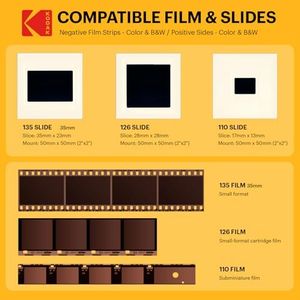
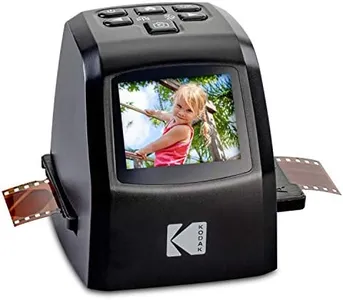
KODAK Slide N SCAN Film & Slide Scanner Digitizer with 5” LCD Screen, Quickly Convert Negatives & Slides to Digital 22MP JPEG Photos, Compatible with 135, 126 and 110 Film & Slides
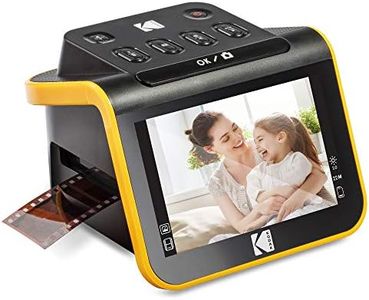
The Kodak Slide N Scan Film and Slide Scanner is designed to help you preserve old photo memories by converting color and black & white negatives and slides into high-resolution digital files. With a resolution of 22 megapixels, it delivers clear and detailed images, making it suitable for most users who want to digitize their film collection. The large 5-inch LCD screen provides a convenient way to preview and edit photos, which is great for sharing with friends and family or using as a digital picture frame.

Rating
10.0
Chosen by1,130
Resolution
Film Compatibility
Software and Features

Most important from
12170 reviews

Resolution
Despite its simplicity, the scanner delivers high-quality digital files that capture details well.
Film Compatibility
The device handles most slides well but may struggle with curled negatives and require manual adjustments.
Software and Features
Easy to use and quick to set up, making it perfect for digitizing old slides and negatives.
#2
9.7 score

Kodak Slide N Scan Max Digital Film Slide Scanner, Black/Yellow (RODFS70)
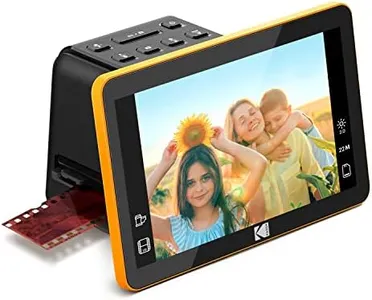
The KODAK 7" Digital Film Scanner is designed for those looking to convert old color and black & white negatives and slides into digital files. One of its standout features is the 7-inch LCD display that allows users to view and edit photos immediately, which can also double as a digital picture frame. This feature is particularly useful for those who enjoy sharing memories with friends and family. The scanner supports various film formats, including 35mm, 110, and 126mm negatives, as well as 50mm slides, making it versatile for different types of film.

Rating
9.7
Resolution
Dynamic Range
Color Depth

Most important from
1708 reviews

Resolution
Easy to use, portable, and functional, with extremely fast operation and great resolution.
Dynamic Range
The auto-exposure feature is highly appreciated, compensating well for over- and under-exposure in slides or negatives.
Color Depth
Adjusting exposures and colors in real-time is a major plus, allowing immediate preview before saving.
Scan Speed
Quick and easy for acceptable scans of memories, though serious photographers might prefer a more professional option.
Film Compatibility
The scanner crops some of the photo, requiring careful adjustments to capture important details.
Software and Features
Reviewing and scanning color negatives is especially nice, as it is very difficult to post-process color negatives in software.
#3
9.1 score

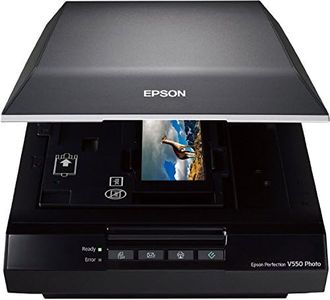
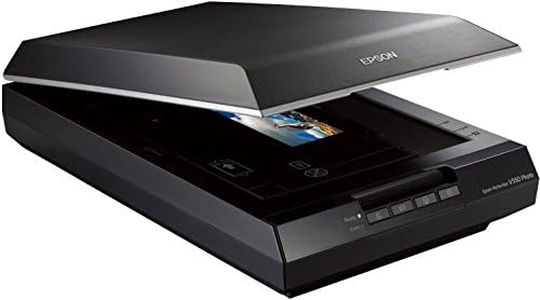
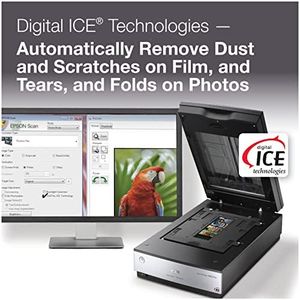
Epson Perfection V550 Color Photo, Image, Film, Negative & Document Scanner with 6400 DPI Optical Resolution
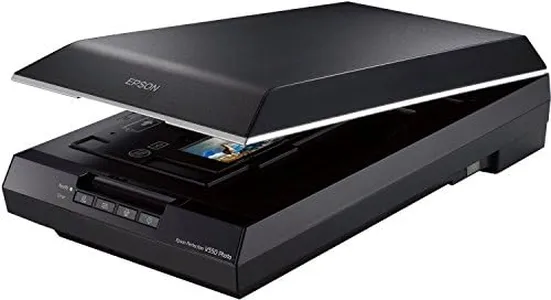
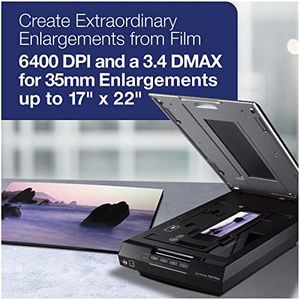
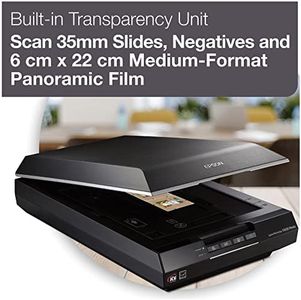
The Epson Perfection V550 is a versatile scanner that works well for anyone looking to digitize 35mm negatives, slides, photos, and documents. With a high optical resolution of 6400 dpi, it can capture detailed images that are good enough for large prints up to 17 x 22 inches. Its 48-bit color depth helps produce rich, true-to-life colors, which is great if you want accurate and vibrant scans. The scanner includes a built-in transparency unit for film scanning and supports various film types, making it suitable for hobbyists and casual users who want to archive old negatives and slides.

Rating
9.1
Resolution
Dynamic Range
Color Depth

Most important from
1415 reviews

Resolution
Produces excellent quality scans that are detailed enough for large prints, making it worth the investment for digitizing family negatives.
Dynamic Range
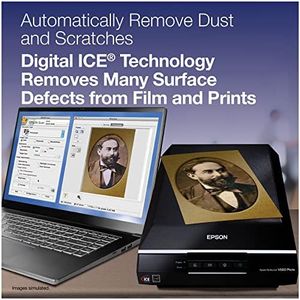
Digital ICE and Color Restoration features significantly reduce the need for manual photo editing by effectively removing scratches and enhancing faded colors.
Color Depth
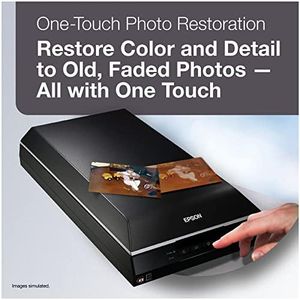
Color restoration works well to revive old and faded negatives, producing vibrant and true-to-life colors as expected from a 48-bit color depth scanner.
Scan Speed
Scan speed is reasonable, averaging about one minute per frame at 300 dpi for 4x6 prints, balancing quality and efficiency for home use.
Film Compatibility
Supports a wide range of film sizes including 35mm and 110 negatives, though the 110 adapter is sold separately and can be expensive.
Software and Features
The scanner is easy to use with an intuitive full auto mode that allows batch scanning of 35mm film strips, making it efficient for large projects.

Top 10 Best Film Negative Scanners 2026 in the United States

Kodak Slide N Scan Max Digital Film Slide Scanner, Black/Yellow (RODFS70)

Resolution: 13/22MP
Film Compatibility: 35mm, 110, 126mm negatives, 50mm slides
Software and Features: Advanced software, single-touch scan, adjust color

Epson Perfection V550 Color Photo, Image, Film, Negative & Document Scanner with 6400 DPI Optical Resolution

Resolution: 6400 dpi
Dynamic Range: modest
Color Depth: 48-bit
Scan Speed: decent
Film Compatibility: 35mm negatives, slides, various films
Software and Features: Digital ICE, Easy Photo Fix, OCR

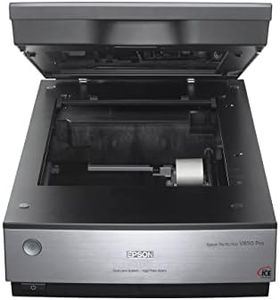
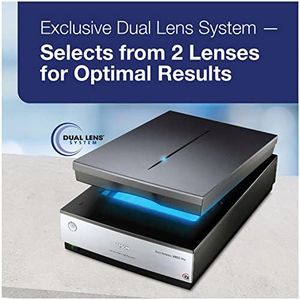
Epson Perfection V850 Pro scanner

Resolution: 6400 dpi
Dynamic Range: 4.0 Dmax
Film Compatibility: film-negative
Software and Features: high-quality scans

Epson Perfection V600 Color Photo, Image, Film, Negative & Document Scanner
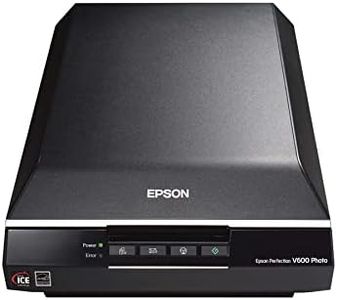
Resolution: 6400 x 9600 dpi
Film Compatibility: Slides, negatives, medium format film
Software and Features: Digital ICE, ABBYY FineReader OCR, ArcSoft
How do we rank products for you?

Our technology thoroughly searches through the online shopping world, reviewing hundreds of sites. We then process and analyze this information, updating in real-time to bring you the latest top-rated products. This way, you always get the best and most current options available.

headphones-stars

Buying Guide for the Best Film Negative Scanners

Choosing the right film-negative scanner can be a bit overwhelming, but understanding the key specifications can help you make an informed decision. A film-negative scanner is a device that converts film negatives into digital images, allowing you to preserve and share your memories in a modern format. When selecting a scanner, consider what you need it for, such as the level of detail you want to capture, the types of film you have, and how you plan to use the digital images. Here are some key specifications to consider and how to navigate them.
ResolutionResolution is measured in dots per inch (DPI) and determines the level of detail the scanner can capture. Higher resolution means more detail and larger file sizes. For casual use and sharing online, a resolution of 2400 DPI to 3200 DPI is usually sufficient. For professional use or large prints, look for scanners with 4000 DPI or higher. Consider your end use: if you plan to print large photos or need high detail for editing, opt for higher resolution. For general archiving and sharing, a moderate resolution will suffice.
Dynamic RangeDynamic range measures the scanner's ability to capture the range of tones from the darkest shadows to the brightest highlights. It is often expressed as a number, with higher numbers indicating better performance. A dynamic range of 3.0 to 3.6 is good for most users, capturing a decent range of tones. For professional photographers or those working with high-contrast images, a dynamic range of 4.0 or higher is preferable. Think about the quality of your negatives and the level of detail you want to preserve when considering dynamic range.
Color DepthColor depth, measured in bits, indicates how many colors the scanner can capture. Higher color depth means more accurate and vibrant colors. Most scanners offer 24-bit color depth, which is adequate for general use. For professional work or high-quality prints, look for scanners with 48-bit color depth. If you are scanning color negatives or slides and want the best color reproduction, higher color depth is beneficial. For black and white negatives or less critical work, standard color depth will be sufficient.
Scan SpeedScan speed refers to how quickly the scanner can digitize a film negative. This is usually measured in seconds per scan. Faster scan speeds are convenient if you have a large number of negatives to scan. For occasional use, scan speed may not be as critical, but for large projects or professional work, a faster scanner can save significant time. Consider how many negatives you need to scan and how much time you are willing to spend on the process.
Film CompatibilityFilm compatibility refers to the types and sizes of film the scanner can handle. Common film types include 35mm, medium format, and large format. Ensure the scanner you choose supports the film types you have. Some scanners come with adapters for different film sizes, while others are specialized for specific formats. Think about your film collection and choose a scanner that can accommodate all the types you need to digitize.
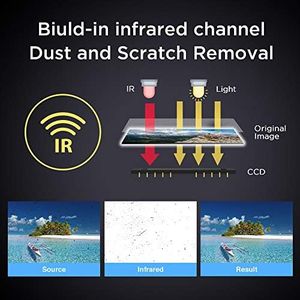
Software and FeaturesThe software and features that come with the scanner can greatly affect your experience. Look for scanners with user-friendly software that offers features like dust and scratch removal, color correction, and batch scanning. These features can save time and improve the quality of your scans. Consider what level of post-processing you are comfortable with and choose a scanner with software that meets your needs. Advanced features are beneficial for professional use, while basic software may be sufficient for casual users.

FAQ