We Use CookiesWe use cookies to enhance the security, performance, functionality and for analytical and promotional activities. By continuing to browse this site you are agreeing to our privacy policy

10 Best Home Energy Monitor 2026 in the United States

#1

Winner

10.0 score

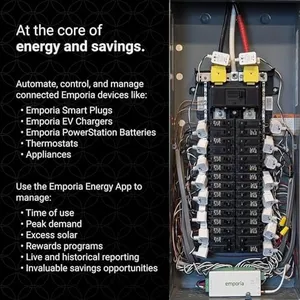
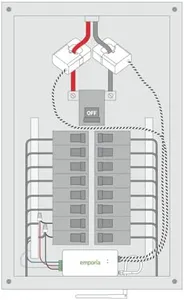
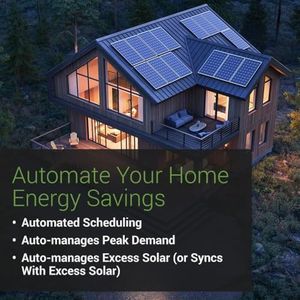
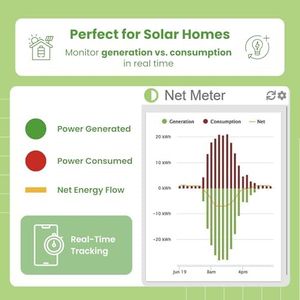
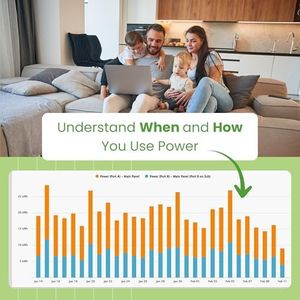
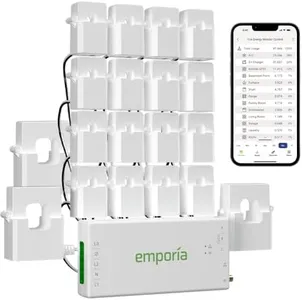
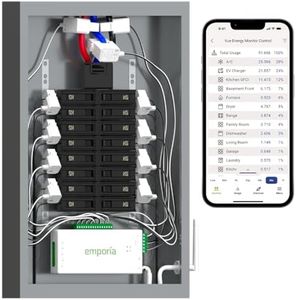
Emporia Vue 3 Home Energy Monitor - Smart Home Automation Module and Real Time Electricity Usage Monitor, Power Consumption Meter, Solar and Net Metering for UL Certified Safe Energy Monitoring
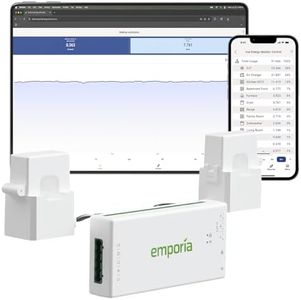
The Emporia Gen 3 Smart Home Energy Monitor offers a solid solution for homeowners looking to manage their energy consumption effectively. Its UL certification highlights its safety, ensuring that it meets rigorous standards, which is a reassuring feature for potential users. The installation is user-friendly, designed to fit into most circuit panels with clamp-on sensors, making it accessible for many households. Compatibility with single-phase and certain multi-phase systems further broadens its usability.

Rating
10.0
Chosen by1,183
Compatibility
Installation Type
Data Accuracy

Most important from
1162 reviews

Compatibility
For larger homes, additional CT sensors might be necessary to cover all key loads effectively.
Installation Type
The installation might be messy in a 200 amp box but is doable, thanks to the well-designed sensors.
Data Accuracy
Real-time monitoring is incredibly precise; you can instantly trace which breaker serves a particular outlet or monitor heat pump performance.
Real-Time Monitoring
Real-time monitoring is incredibly precise; you can instantly trace which breaker serves a particular outlet or monitor heat pump performance.
Historical Data Tracking
The app provides valuable granularity in energy usage, helping users make informed decisions like switching appliances to save on energy costs.
Alerts and Notifications
The app could benefit from more comprehensive notification triggers to alert users of unusual energy consumption patterns.
Integration with Other Systems
The software stands out with its instant response and intuitive displays, praised even by users with programming experience.
#2
8.5 score

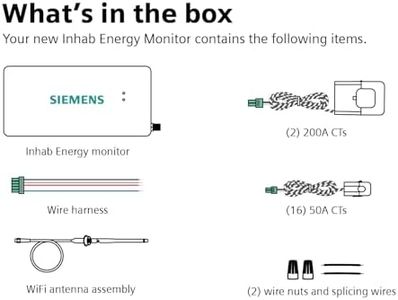
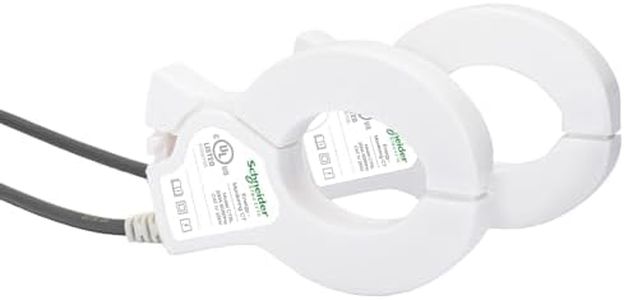
SIEMENS Inhab Smart Home Energy Monitor with 16-50Amp Circuit Level Sensors and 2-200Amp Main Sensors for Real Time Electricity Monitoring and Metering
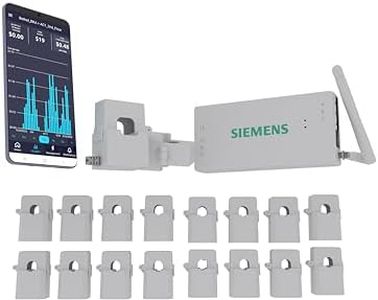
The SIEMENS Inhab Smart Home Energy Monitor is an impressive tool designed for homeowners looking to track and manage their energy usage effectively. One of its standout features is its ability to provide real-time monitoring of both whole-home and individual circuit energy consumption, making it a solid choice for users who want insight into their energy habits. The integration with a mobile app enhances its usability, allowing users to access current and historical data anytime. Personalized energy notifications are particularly beneficial for alerting users to unusual energy spikes or helping them identify opportunities for energy savings.

Rating
8.5
Compatibility
Installation Type
Data Accuracy

Most important from
70 reviews

Compatibility
The Siemens app works well, featuring 15-minute demand level monitoring and the ability to export data, although a PC-based interface would be more convenient for some users.
Installation Type
Installation is straightforward and the app interface is easy to use, offering well-organized and insightful data.
Data Accuracy
The system offers tremendous functionality at a great value, with data logging down to a 1-second level, which is impressive for a residential product.
Real-Time Monitoring
While the sensors are a bit large and can make installation challenging, they provide detailed real-time monitoring.
Historical Data Tracking
The system provides extremely useful data and charts, immediately highlighting areas where money is being wasted.
#3
7.9 score

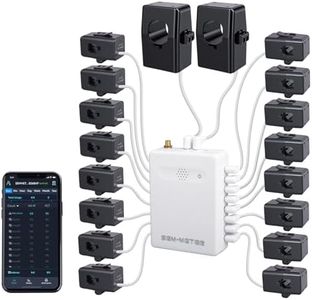
Meross Smart Energy Consumption Monitor with 18 Circuit Monitoring, Electricity Usage Monitor, Real-Time Power Usage Monitor, Home Assistant Support, Smart Alerts, No Subscriptions, 2-Year Warranty
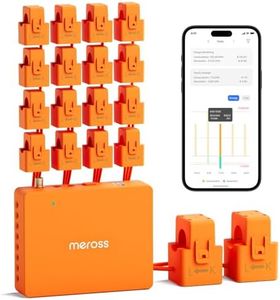
The Meross Smart Energy Consumption Monitor is a reliable choice for homeowners looking to track detailed electricity use across up to 18 circuits. It supports most common US electrical systems and features an easy clamp-on installation that can be done quickly without complicated rewiring. This monitor delivers good data accuracy (±2%), showing power, voltage, and current in real time while also storing up to five years of historical data. You can view energy use in clear charts by minute, hour, day, or longer, helping identify energy hogs and reduce electricity bills by around 10–20%.

Rating
7.9
Installation Type
Data Accuracy
Historical Data Tracking

Most important from
19 reviews

Installation Type
Installation inside the electrical panel is refreshingly straightforward with well-designed clamp-on sensors and clear documentation, making setup logical rather than intimidating.
Data Accuracy
The monitor delivers consistently reliable, real-time energy usage data that aligns well with utility bills, providing accurate and meaningful insights into power, voltage, and current.
Historical Data Tracking
Historical energy views make it easy to identify usage patterns, phantom loads, and energy hogs, helping to reduce electricity bills effectively.
Alerts and Notifications
Custom smart alerts for unusual energy spikes work without any subscription or cloud fees, offering real peace of mind and full data privacy.
Real-Time Monitoring
The device maintains stable daily operation with timely data updates, solid connectivity, and no unexplained dropouts, backed by a reassuring 2-year warranty.
Integration with Other Systems
Home Assistant integration is seamless, enabling powerful reporting and automation, especially valuable for homes with solar energy and battery storage.
Compatibility
The monitor supports up to 18 circuits but has some limitations in distributing additional channels evenly, which may require consideration for larger panels.

Top 10 Best Home Energy Monitor 2026 in the United States

SIEMENS Inhab Smart Home Energy Monitor with 16-50Amp Circuit Level Sensors and 2-200Amp Main Sensors for Real Time Electricity Monitoring and Metering
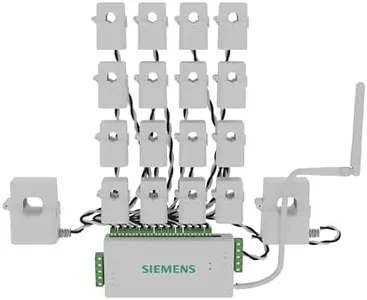
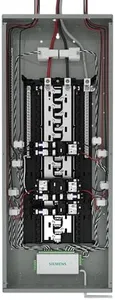
Compatibility: US and Canadian systems
Installation Type: Integrated into new and existing panels
Real-Time Monitoring: Yes
Historical Data Tracking: Yes
Alerts and Notifications: Personalized notifications
Integration with Other Systems: Mobile app

Meross Smart Energy Consumption Monitor with 18 Circuit Monitoring, Electricity Usage Monitor, Real-Time Power Usage Monitor, Home Assistant Support, Smart Alerts, No Subscriptions, 2-Year Warranty
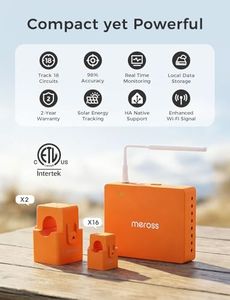
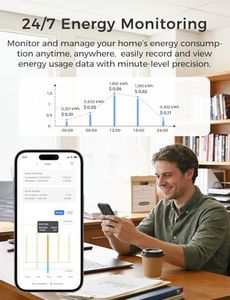
Compatibility: common US electrical systems
Installation Type: easy clamp-on installation
Data Accuracy: ±2%
Real-Time Monitoring: power, voltage, current in real time
Historical Data Tracking: stores up to five years data
Alerts and Notifications: smart alerts for unusual spikes
Integration with Other Systems: integrates with Home Assistant

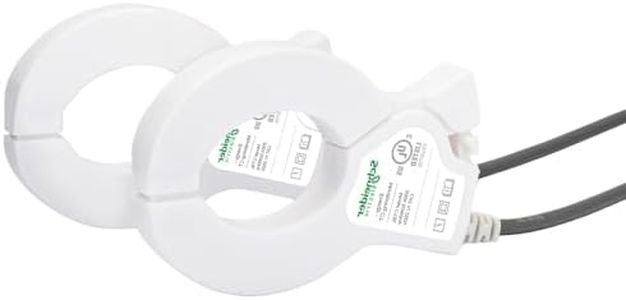
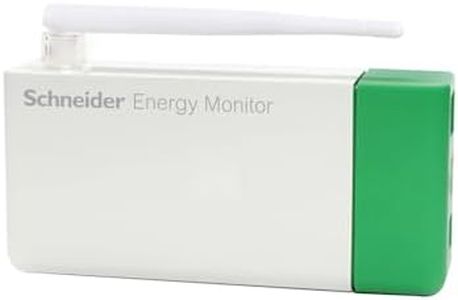
Square D - WISEREMPV Energy Monitor System, White

Compatibility: Amazon Alexa, Google Home, Phillips Hue
Installation Type: Wireless DIY
Real-Time Monitoring: Live energy tracking
Alerts and Notifications: Alerts if appliances left on
Integration with Other Systems: Amazon Alexa, Google Home, Phillips Hue

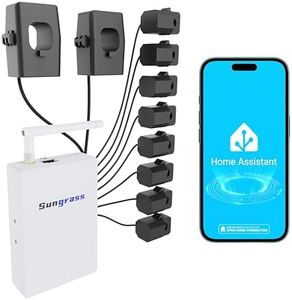
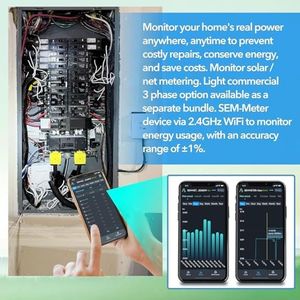
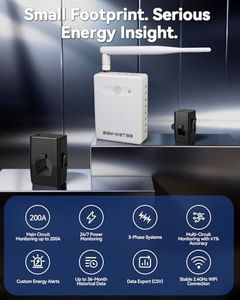
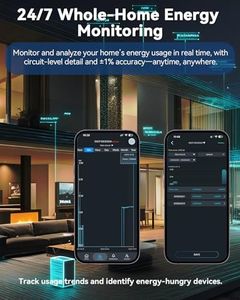
Smart Home Energy Monitor, Measure Power Usage in Real-Time, History with App (2 200A Circuit Level Sensors) - Compatible with Home Assistant
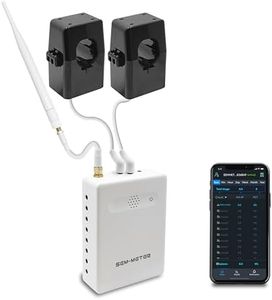
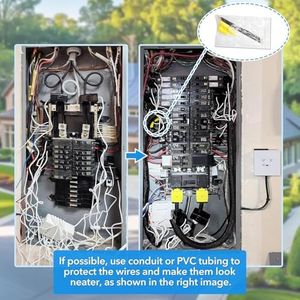
Compatibility: single and multi-phase systems
Installation Type: clamp-on and flexible sensors
Data Accuracy: around 1%
Real-Time Monitoring: yes
Historical Data Tracking: power use over hours to years
Alerts and Notifications: energy use notifications
Integration with Other Systems: Home Assistant
How do we rank products for you?

Our technology thoroughly searches through the online shopping world, reviewing hundreds of sites. We then process and analyze this information, updating in real-time to bring you the latest top-rated products. This way, you always get the best and most current options available.

headphones-stars

Buying Guide for the Best Home Energy Monitor

Choosing the right home energy monitor can help you track and manage your energy consumption, leading to potential savings on your utility bills and a more environmentally friendly household. When selecting a home energy monitor, it's important to consider several key specifications to ensure you get a device that meets your needs and provides accurate, useful information.
CompatibilityCompatibility refers to whether the energy monitor can work with your existing electrical system and smart home devices. This is important because an incompatible monitor may not function correctly or provide accurate data. To navigate this, check if the monitor supports your home's voltage and current type (single-phase or three-phase). Additionally, ensure it can integrate with your smart home ecosystem, such as Alexa, Google Home, or other smart devices you use. Choose a monitor that matches your home's electrical setup and smart home devices to ensure seamless operation.
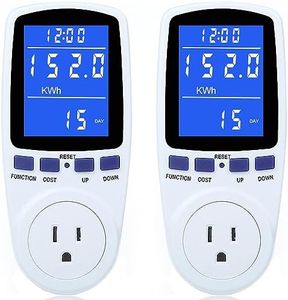
Installation TypeInstallation type indicates how the energy monitor is set up in your home. This is crucial because some monitors require professional installation, while others are DIY-friendly. Monitors can be divided into two segments: plug-in models and circuit-level models. Plug-in models are easy to install and simply plug into an outlet, making them ideal for renters or those who prefer a quick setup. Circuit-level models require installation in your electrical panel and may need an electrician, but they provide more detailed data. Choose a plug-in model for simplicity or a circuit-level model for comprehensive monitoring.
Data AccuracyData accuracy refers to how precisely the energy monitor measures and reports your energy usage. This is important because accurate data helps you make informed decisions about energy consumption. Accuracy can vary, with some monitors providing general estimates and others offering precise measurements. Look for monitors with a high accuracy rate, often indicated by a percentage (e.g., ±1%). If you need detailed insights for optimizing energy use, choose a monitor with high accuracy. For general awareness, a less precise monitor may suffice.
Real-Time MonitoringReal-time monitoring means the energy monitor provides immediate feedback on your energy usage. This is important for identifying energy-hungry devices and making instant adjustments. Monitors can offer real-time data through a display, app, or web interface. Some provide updates every few seconds, while others may update every few minutes. If you want to actively manage your energy use and quickly identify issues, choose a monitor with frequent real-time updates. For less active monitoring, a device with periodic updates may be adequate.
Historical Data TrackingHistorical data tracking allows the energy monitor to store and display past energy usage data. This is important for analyzing trends and making long-term energy-saving decisions. Monitors can vary in how much data they store and how they present it. Some offer detailed daily, weekly, and monthly reports, while others provide more basic summaries. If you want to track and analyze your energy use over time, choose a monitor with comprehensive historical data tracking. For a simpler overview, a monitor with basic tracking may be enough.
Alerts and NotificationsAlerts and notifications are features that inform you about unusual energy usage or potential issues. This is important for quickly addressing problems and avoiding high energy bills. Monitors can send alerts via email, text, or app notifications. Some allow you to set custom thresholds for alerts, while others have predefined settings. If you want to stay on top of your energy use and address issues promptly, choose a monitor with customizable alerts and notifications. For less frequent updates, a monitor with basic alert features may be suitable.
Integration with Other SystemsIntegration with other systems refers to the energy monitor's ability to work with other smart home devices and platforms. This is important for creating a cohesive smart home ecosystem. Monitors can integrate with systems like smart thermostats, solar panels, and home automation platforms. Some offer extensive compatibility, while others may be limited. If you have or plan to build a smart home, choose a monitor with broad integration capabilities. For standalone use, a monitor with limited integration may be sufficient.

FAQ