We Use CookiesWe use cookies to enhance the security, performance, functionality and for analytical and promotional activities. By continuing to browse this site you are agreeing to our privacy policy

10 Best Lcr Meters 2026 in the United States

#1

Winner

10.0 score

Hioki IM3536 General Purpse LCR Meter, DC 4 Hz to 8 MHz
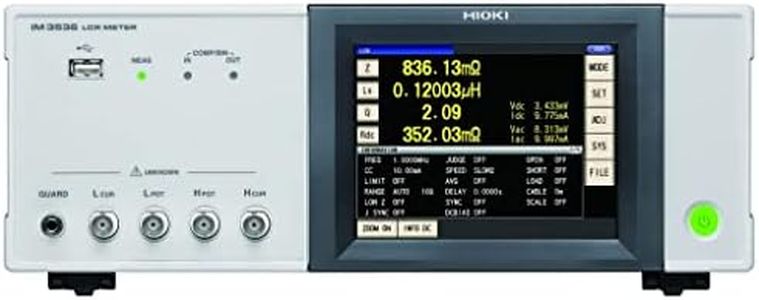
The Hioki IM3536 is a solid choice if you're looking for a general-purpose LCR meter with a wide measurement frequency range from DC 4 Hz up to 8 MHz. This broad range means it can test many different components with good flexibility. Hioki is known for reliable measurements, so you can expect decent precision for most standard tasks.

#2
9.7 score

B&K Precision 891 - Benchtop LCR Meter 300 kHz

The B&K Precision 891 Benchtop LCR Meter is designed for professionals and hobbyists who need precise measurements of inductance, capacitance, resistance, and more. With a measurement range up to 300 kHz and an impressive accuracy of 0.05%, it excels in providing reliable and accurate data, which is crucial for tasks requiring high precision in electronic testing. The selectable test levels of 0.5 Vrms and 1 Vrms allow for flexibility, making it suitable for various testing environments and components.

Rating
9.7
Test Frequency

Most important from
1 reviews

Test Frequency
The B&K Precision 891 offers more frequency options with measurements up to 300 kHz, which surpasses many handheld meters.
#3
9.4 score

B&K Precision 880 100 kHz Handheld LCR Meter, Blue
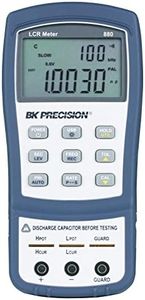
The B&K Precision 880 Handheld LCR Meter is designed for individuals who need to measure inductance (L), capacitance (C), resistance (R), and impedance (Z) accurately. One of its main strengths is its impressive measurement accuracy of up to 0.1% and a wide test frequency range of up to 100 kHz, which makes it suitable for various electronic testing applications. The 40,000 counts resolution on the primary display ensures that users get detailed measurements, while the secondary display offers a 10,000 counts resolution for additional insights.

Rating
9.4
Accuracy
Test Frequency

Most important from
23 reviews

Accuracy
Displays very low Dielectric Absorption values accurately for glass capacitors.
Test Frequency
Accurately measures inductors, even at 100 kHz test frequency.

Top 10 Best Lcr Meters 2026 in the United States

#1

Winner

10.0  score

Hioki IM3536 General Purpse LCR Meter, DC 4 Hz to 8 MHz

Measurement Range: DC 4 Hz to 8 MHz
Portability: 10 Pounds, Battery Powered

Chosen by 1456 this week

B&K Precision 891 - Benchtop LCR Meter 300 kHz

Measurement Range: up to 300 kHz
Accuracy: 0.05%
Test Frequency: 20 Hz to 300 kHz
Portability: limited

B&K Precision 880 100 kHz Handheld LCR Meter, Blue

Measurement Range: up to 100 kHz
Accuracy: up to 0.1%
Test Frequency: up to 100 kHz
Display Type: 40,000 counts primary, 10,000 secondary
Portability: Handheld

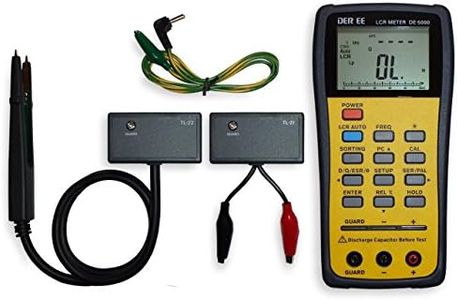
DE-5000 Handheld LCR Meter

Accuracy: high-accuracy
Test Frequency: 100Hz, 120Hz, 1kHz, 10kHz, 100kHz
Display Type: dual display
Portability: 450 grams

GW INSTEK LCR-6002 Precision LCR Meter, Bench, 2KHZ
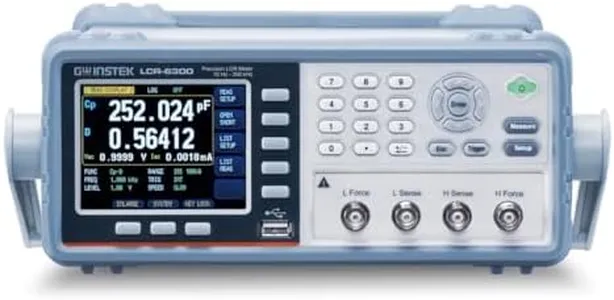
Measurement Range: Inductance up to 9.99999kH, Capacitance up to 9.99999F, Resistance up to 99.9999Mohm
Test Frequency: 2kHz
Portability: 4 kilograms

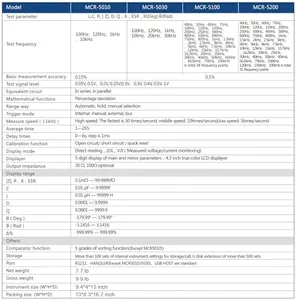
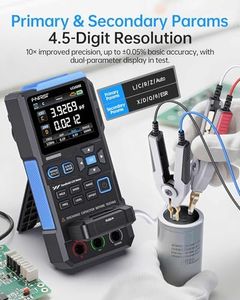
MATRIX MCR5200 Benchtop LCR Meter, 40Hz-200kHz 0.1%, Digital LCR Bridge Measures Inductance/Capacitance/Resistance, USB/RS232C, Calib-Clear, Data Save

Measurement Range: 0.01 μH to 99999 H, 0.01 pF to 9.9999 F, 0.1mΩ to 99.999 MΩ
Accuracy: 0.1%
Test Frequency: 40Hz to 200kHz
Display Type: 4.3-inch TFT LCD
Connectivity: USB HOST, RS232C, GPIB
Portability: Not portable, 7.7 pounds

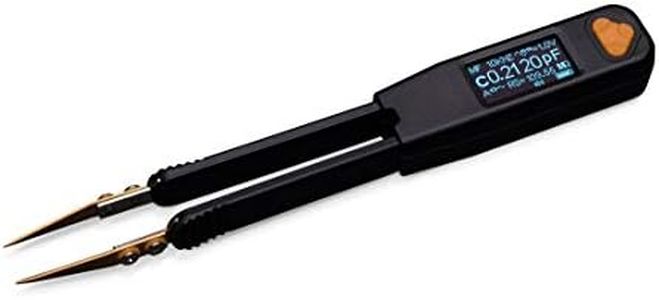
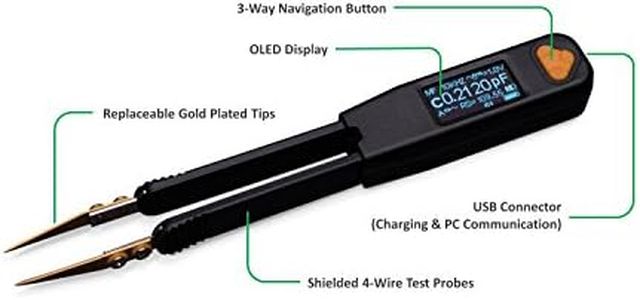
LCR Research Pro1-100KHz LCR Meter with 0.1% Accuracy/ESR Meter/Smart SMD Tweezers

Measurement Range: small to large resistance, capacitance, inductance
Accuracy: 0.1% resistance, 0.2% inductance, capacitance
Test Frequency: five frequencies from 100Hz to 100kHz
Portability: lightweight, battery-powered, USB charging
How do we rank products for you?

Our technology thoroughly searches through the online shopping world, reviewing hundreds of sites. We then process and analyze this information, updating in real-time to bring you the latest top-rated products. This way, you always get the best and most current options available.

headphones-stars

Buying Guide for the Best Lcr Meters

An LCR meter is a type of electronic test equipment used to measure the inductance (L), capacitance (C), and resistance (R) of electronic components. Choosing the right LCR meter involves understanding your specific needs and the key specifications that will impact the performance and usability of the device. Here are some important factors to consider when selecting an LCR meter.
Measurement RangeThe measurement range of an LCR meter indicates the span of values it can accurately measure for inductance, capacitance, and resistance. This is important because it determines whether the meter can handle the components you need to test. Measurement ranges are typically divided into segments such as low, medium, and high. Low ranges are suitable for small components, medium ranges for general-purpose use, and high ranges for large components or high-precision applications. Choose a meter with a range that covers the values of the components you commonly work with.
AccuracyAccuracy refers to how close the measured value is to the actual value of the component. This is crucial for ensuring reliable and precise measurements. Accuracy is usually expressed as a percentage, with lower percentages indicating higher accuracy. For example, an accuracy of 0.1% is better than 1%. If you need precise measurements for high-quality or critical applications, opt for an LCR meter with higher accuracy. For general or less critical tasks, a meter with standard accuracy will suffice.
Test FrequencyTest frequency is the frequency at which the LCR meter applies the test signal to the component. Different components may behave differently at various frequencies, so having a range of test frequencies can provide more comprehensive measurements. Common test frequencies include 100 Hz, 1 kHz, and 10 kHz. If you work with components that operate at specific frequencies, choose an LCR meter that can test at those frequencies. For general use, a meter with multiple test frequencies is more versatile.
Display TypeThe display type of an LCR meter affects how easily you can read and interpret the measurements. Common display types include LCD and LED screens. LCD screens are generally easier to read in various lighting conditions and can show more information at once, while LED screens are bright and clear but may be harder to read in bright light. Choose a display type that suits your working environment and personal preference for readability.
ConnectivityConnectivity options, such as USB, Bluetooth, or RS-232, allow you to connect the LCR meter to a computer or other devices for data logging and analysis. This is important for documenting measurements and integrating the meter into automated test setups. If you need to record and analyze data frequently, look for an LCR meter with suitable connectivity options. For occasional use, basic connectivity may be sufficient.
PortabilityPortability refers to the ease with which you can transport and use the LCR meter in different locations. Portable LCR meters are typically smaller, lighter, and battery-operated, making them ideal for fieldwork or on-site testing. Bench-top models are larger and may offer more features but are less convenient to move around. Consider where and how you will use the meter to determine whether portability is a key factor for you.

FAQ