10 Best Telescopes For Beginners 2026 in the United States
Winner
Gskyer Telescope 600x90mm AZ Astronomical Refractor Telescope for Adults Astronomy, German Technology Scope
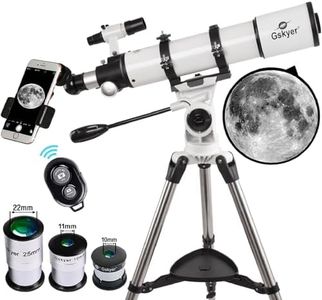
The Gskyer 600x90mm AZ refractor telescope is a solid choice for beginners interested in astronomy. Its 90mm aperture is large enough to gather a good amount of light, allowing you to see the moon, planets, and some star clusters with decent clarity. With a focal length of 600mm and multiple eyepieces (24X, 60X, 120X) plus a 3x Barlow lens, it offers flexible magnification options up to 360x, which is more than enough for beginner stargazing.
Most important from
901 reviews
Gskyer Telescope, 70mm Aperture 400mm AZ Mount Astronomical Refracting Telescope for Kids Beginners - Travel Telescope with Carry Bag, Phone Adapter and Wireless Remote.
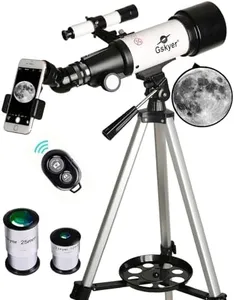
The Gskyer Telescope is an appealing choice for beginners looking to explore the night sky. With a 70mm aperture and a 400mm focal length, it offers good light-gathering ability, allowing for clearer views of celestial objects such as the moon and stars. The telescope's fully coated optics enhance image quality and make stargazing enjoyable without straining your eyes. One of its strengths includes a 3x Barlow lens, which significantly increases the magnification, giving users more versatility with the two included eyepieces.
Most important from
21806 reviews
Celestron StarSense Explorer DX 130AZ App-Enabled Telescope – 130mm Newtonian Reflector with Smartphone Dock & StarSense App – iPhone & Android Compatible – Easy-to-Use for Beginners
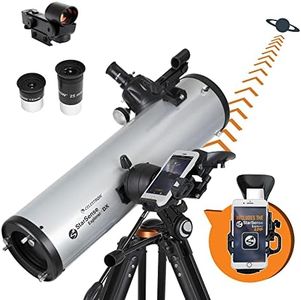
The Celestron StarSense Explorer DX 130AZ is a solid choice for beginners who want to explore the night sky without prior experience. One of its standout features is the integration with a smartphone app that guides users to locate celestial objects, making it user-friendly. The 130mm Newtonian reflector offers good light-gathering capability, allowing users to see detailed views of the Moon, planets, and some deep-sky objects, which is quite impressive for an entry-level telescope.
Most important from
1545 reviews
Top 10 Best Telescopes For Beginners 2026 in the United States
Winner
Gskyer Telescope 600x90mm AZ Astronomical Refractor Telescope for Adults Astronomy, German Technology Scope


Gskyer Telescope 600x90mm AZ Astronomical Refractor Telescope for Adults Astronomy, German Technology Scope
Chosen by 1374 this week
Gskyer Telescope, 70mm Aperture 400mm AZ Mount Astronomical Refracting Telescope for Kids Beginners - Travel Telescope with Carry Bag, Phone Adapter and Wireless Remote.


Gskyer Telescope, 70mm Aperture 400mm AZ Mount Astronomical Refracting Telescope for Kids Beginners - Travel Telescope with Carry Bag, Phone Adapter and Wireless Remote.
Celestron StarSense Explorer DX 130AZ App-Enabled Telescope – 130mm Newtonian Reflector with Smartphone Dock & StarSense App – iPhone & Android Compatible – Easy-to-Use for Beginners


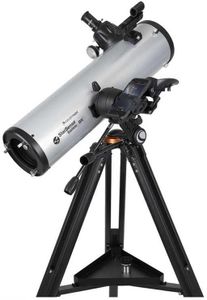

Celestron StarSense Explorer DX 130AZ App-Enabled Telescope – 130mm Newtonian Reflector with Smartphone Dock & StarSense App – iPhone & Android Compatible – Easy-to-Use for Beginners
Celestron StarSense Explorer 8-inch App-Enabled Telescope – 203mm Dobsonian with Smartphone Dock & StarSense App – iPhone & Android Compatible – Easy-to-Use for Beginners
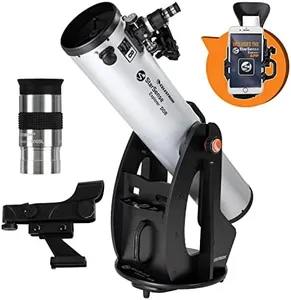


Celestron StarSense Explorer 8-inch App-Enabled Telescope – 203mm Dobsonian with Smartphone Dock & StarSense App – iPhone & Android Compatible – Easy-to-Use for Beginners
MEEZAA Telescope, Telescope for Adults High Powered Professional, 90mm Aperture 800mm Refractor Telescopes for Astronomy Beginners Fully Multi-Coated with AZ Mount Tripod & Phone Adapter & Carry Bag
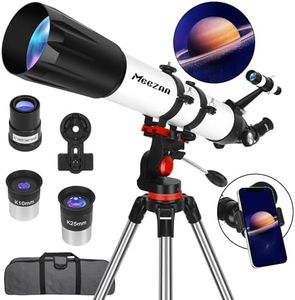
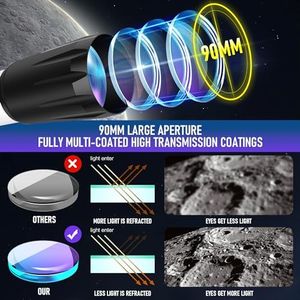

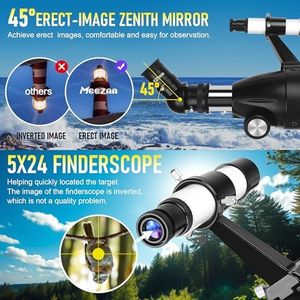

MEEZAA Telescope, Telescope for Adults High Powered Professional, 90mm Aperture 800mm Refractor Telescopes for Astronomy Beginners Fully Multi-Coated with AZ Mount Tripod & Phone Adapter & Carry Bag
Related Products
Up to 25% off
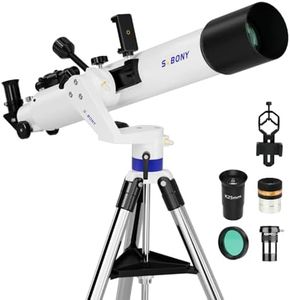
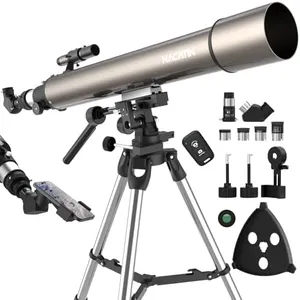
Celestron StarSense Explorer LT 114AZ App-Enabled Telescope – 114mm Newtonian Reflector with Smartphone Dock & StarSense App – iPhone & Android Compatible – Easy-to-Use for Beginners
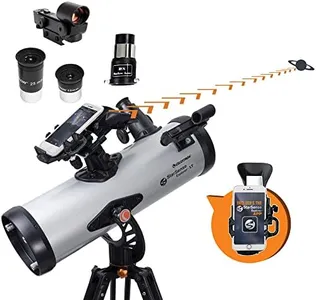
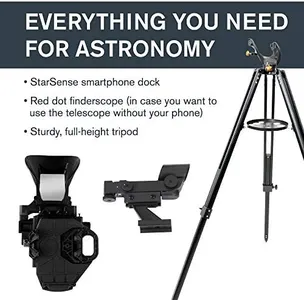


Celestron StarSense Explorer LT 114AZ App-Enabled Telescope – 114mm Newtonian Reflector with Smartphone Dock & StarSense App – iPhone & Android Compatible – Easy-to-Use for Beginners
Celestron – AstroMaster 130EQ Newtonian Telescope – Manual Reflector for Beginners – Aluminized Mirror – Adjustable-Height Tripod – Includes Accessories Plus Astronomy Software Package
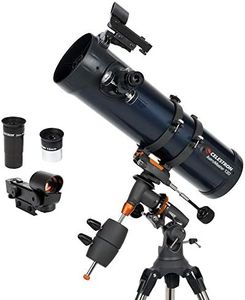
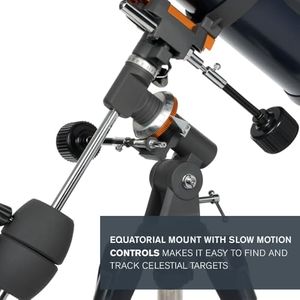
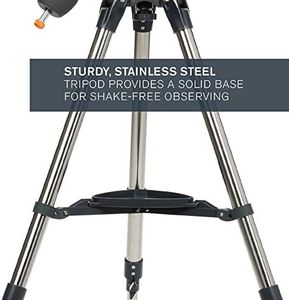
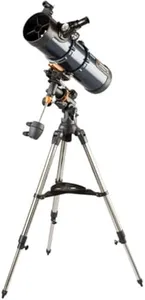
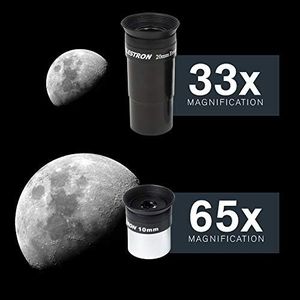
Celestron – AstroMaster 130EQ Newtonian Telescope – Manual Reflector for Beginners – Aluminized Mirror – Adjustable-Height Tripod – Includes Accessories Plus Astronomy Software Package
Telescope, Gskyer 130EQ Professional Astronomical Reflector Telescope, German Technology Scope, EQ-130 (EQ-130)
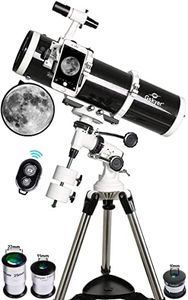
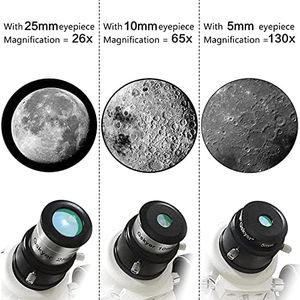
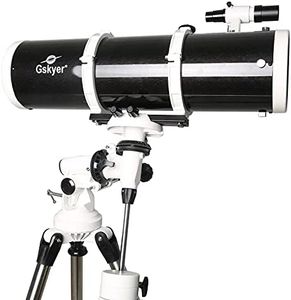
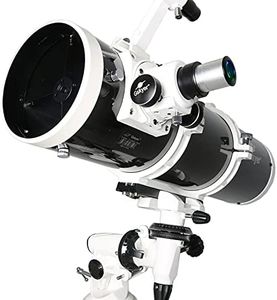
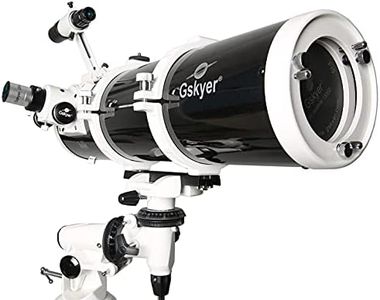
Telescope, Gskyer 130EQ Professional Astronomical Reflector Telescope, German Technology Scope, EQ-130 (EQ-130)
Sky-Watcher EvoStar 100 APO Doublet Refractor – Compact and Portable Optical Tube for Affordable Astrophotography and Visual Astronomy
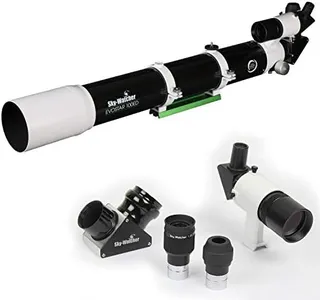
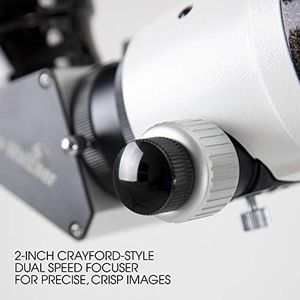
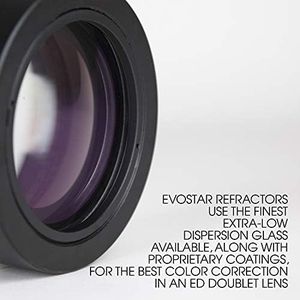
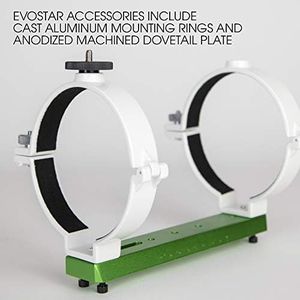
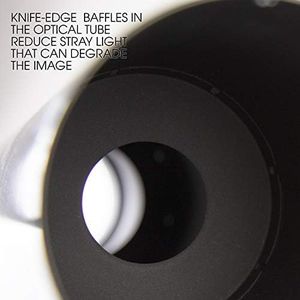
Sky-Watcher EvoStar 100 APO Doublet Refractor – Compact and Portable Optical Tube for Affordable Astrophotography and Visual Astronomy
Telescope for Adults & Beginner Astronomers - 80mm Aperture 600mm Fully Multi-Coated High Transmission Coatings with AZ Mount Tripod Phone Adapter, Carrying Bag, Wireless Control.
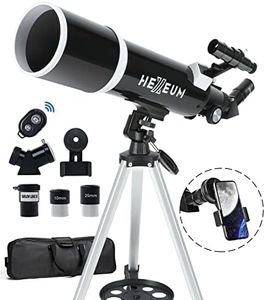


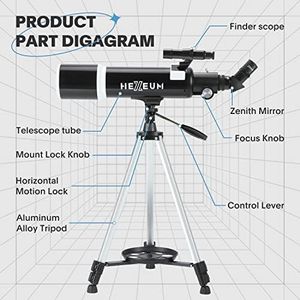
Telescope for Adults & Beginner Astronomers - 80mm Aperture 600mm Fully Multi-Coated High Transmission Coatings with AZ Mount Tripod Phone Adapter, Carrying Bag, Wireless Control.
Recommended lists


Our technology thoroughly searches through the online shopping world, reviewing hundreds of sites. We then process and analyze this information, updating in real-time to bring you the latest top-rated products. This way, you always get the best and most current options available.
